Showing posts with label tones. Show all posts

Sunday, April 05, 2026

MEotW: wú‐suǒwèi

The Mandarin Expression of the Week is:

How might a Mandarin-speaking person say “it doesn’t matter how we worship God”?


Lyrics for the Faye Wong song “Shìyán” (“Pledge”) in Apple Music, on an iPad

Lyrics for the Faye Wong song “Shìyán” (“Pledge”) in Apple Music, on an iPad


Comments are enabled on this blog, so if you are so inclined, comment away!


A news feed for this blog is available here.


Sunday, August 17, 2025

MEotW: yīnwei

The Mandarin Expression of the Week is:

In the Mandarin field, how can we decide what kind of Mandarin to learn and to speak?


Comments are enabled on this blog, so if you are so inclined, comment away!


A news feed for this blog is available here.


Saturday, June 22, 2024

MEotW:

The Mandarin Expression of the Week is:

How important is talent with music or languages when it comes to learning Mandarin? What else is important for learning Mandarin?


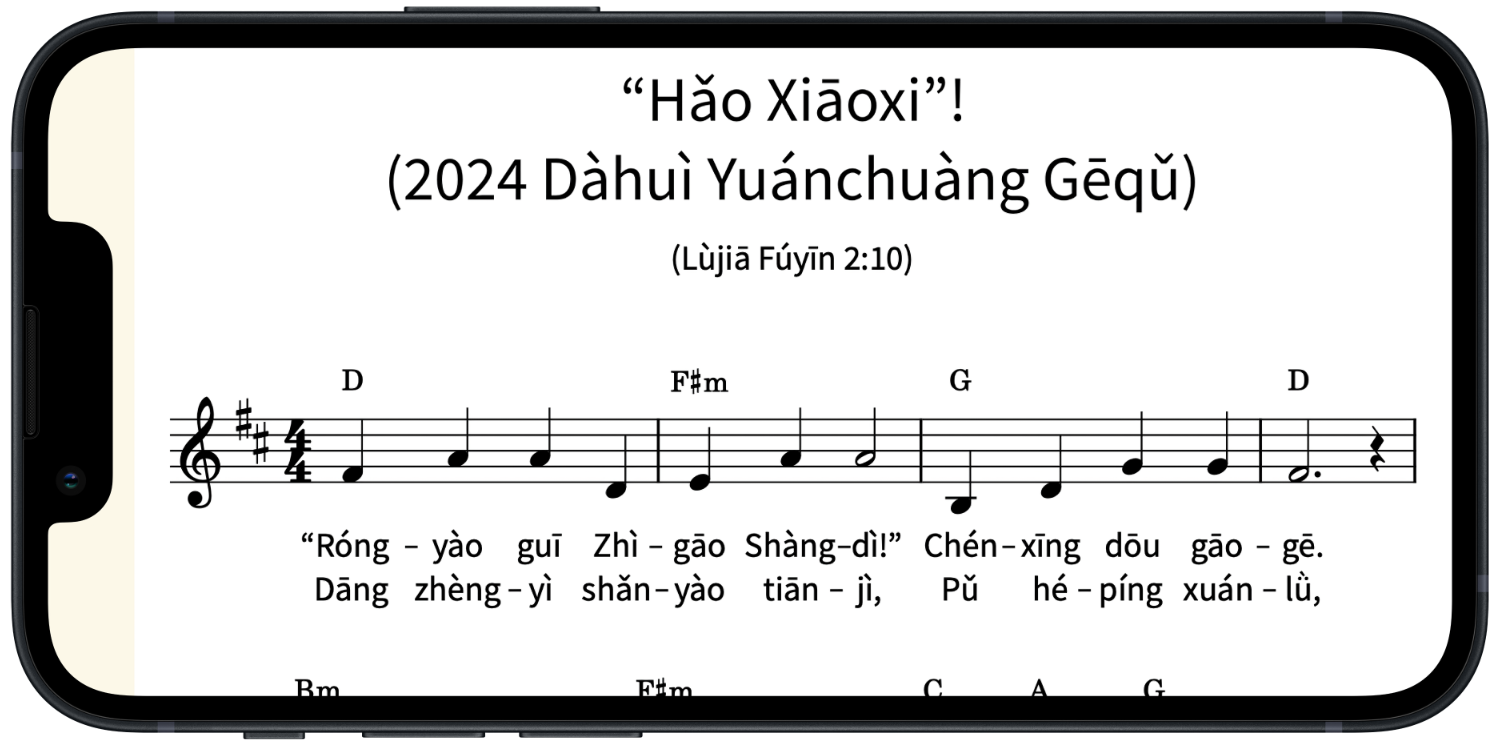
2024 convention song “‘Hǎo Xiāoxi’!” (music+_Pīnyīn_), on iPhone (landscape orientation)

The 2024 convention song “‘Hǎo Xiāoxi’!” (music+Pīnyīn), on an iPhone (landscape orientation)


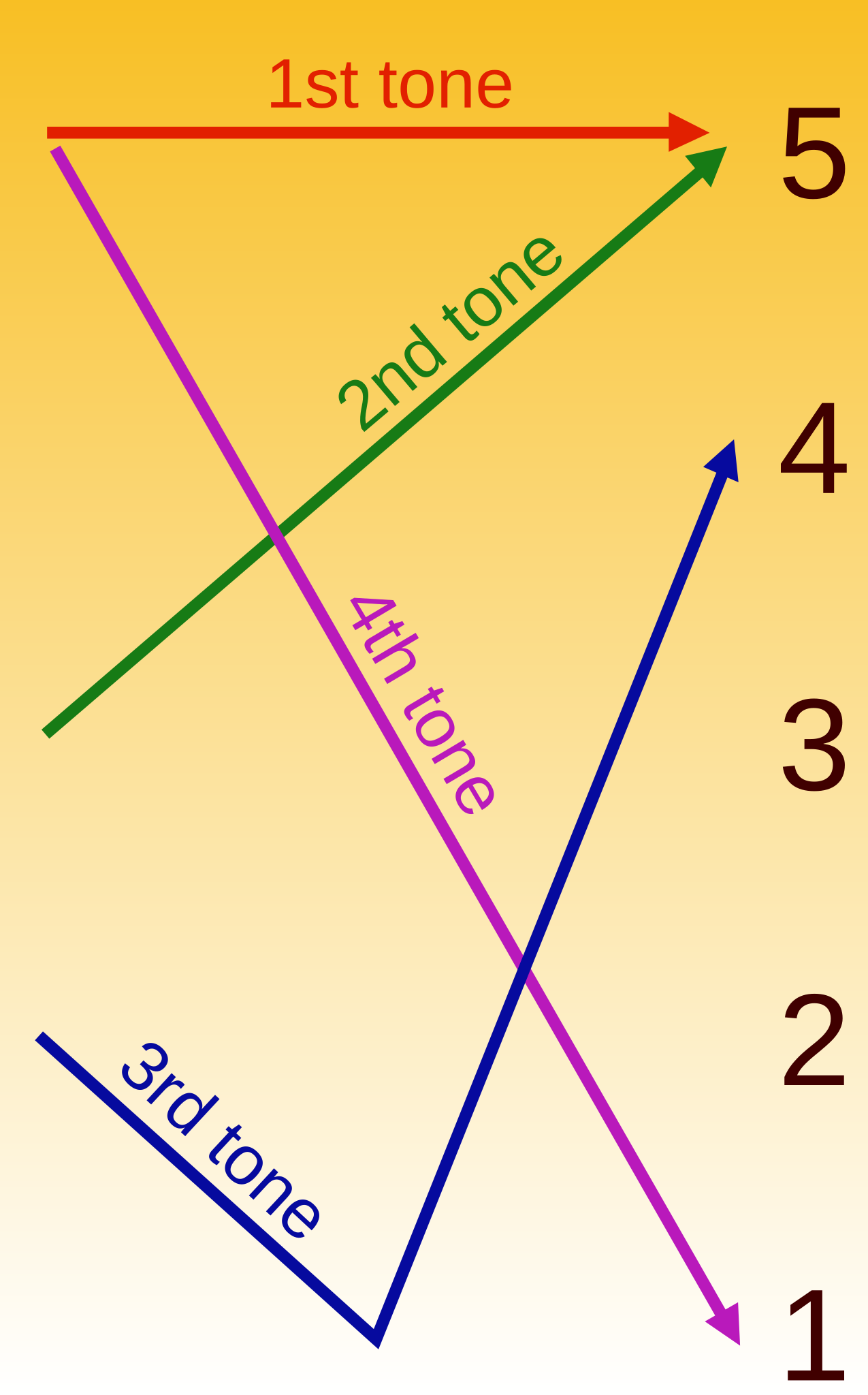
Chart showing the relative changes in pitch for the four tones of Mandarin Chinese

Chart showing the relative changes in pitch for the four tones of Mandarin Chinese
Creative Commons Attribution-ShareAlike License logo Wereon


Comments are enabled on this blog, so if you are so inclined, comment away!


A news feed for this blog is available here.


Friday, June 14, 2024

MEotW: jiànshi

The Mandarin Expression of the Week is:

As Mandarin field language learners, why should we focus on Jehovah’s powerful gift of speech, rather than on the human invention of writing? How can we do so?


Comments are enabled on this blog, so if you are so inclined, comment away!


A news feed for this blog is available here.


Tuesday, January 02, 2024

MEotW: rénxīn‐huánghuáng

The Mandarin Expression of the Week is:

When talking to Mandarin-speaking people, how might we bring up the topic of the anxiety-inducing year that we just lived through?


Comments are enabled on this blog, so if you are so inclined, comment away!


A news feed for this blog is available here.


Wednesday, June 14, 2023

MEotW: cì’ěr

The Mandarin Expression of the Week is:

How can we avoid being a “clashing cymbal” in the Mandarin field?


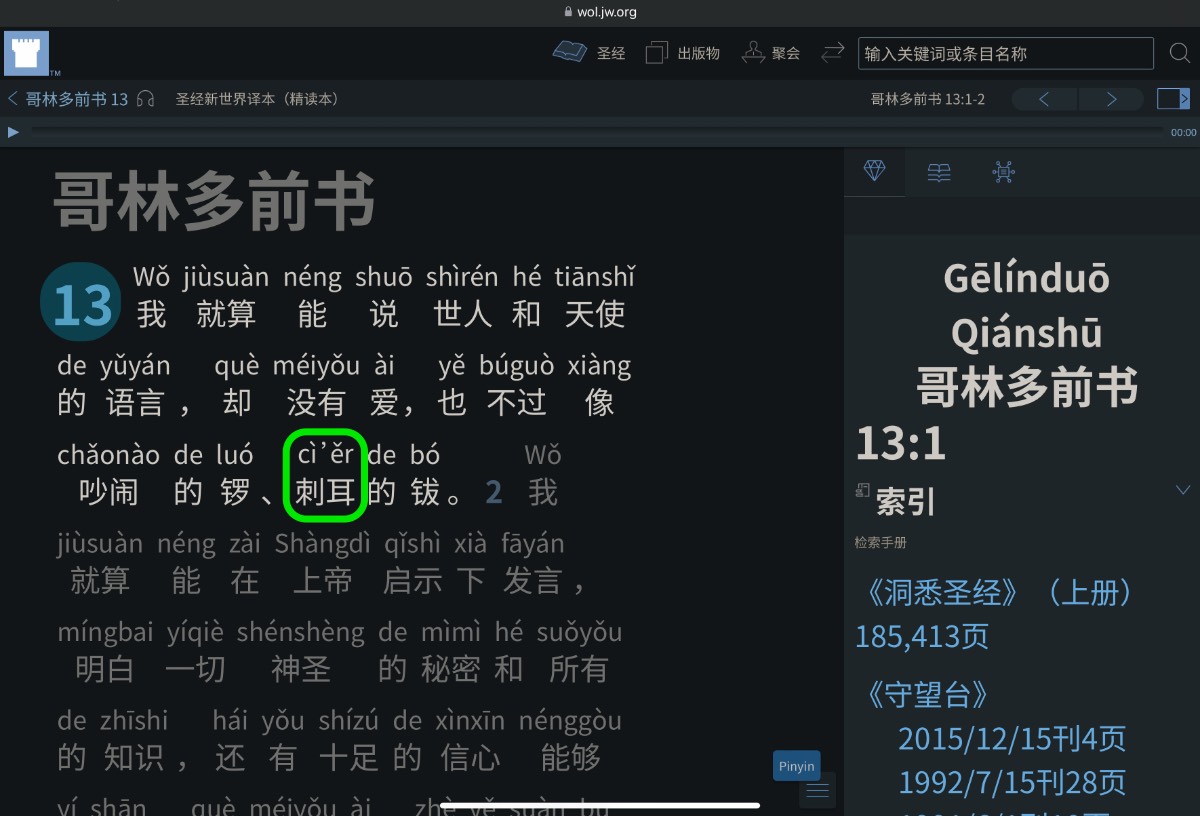
Screenshot of “cì’ěr” in 1 Co. 13:1 (nwtsty, CHS+_Pīnyīn_ WOL)


Comments are enabled on this blog, so if you are so inclined, comment away!


A news feed for this blog is available here.


Tuesday, January 10, 2023

MEotW: bǎilàn

The Mandarin Expression of the Week is:

How can we Mandarin field language learners avoid letting our Mandarin “rot”?


Screenshot of some image results from searching for “摆烂” (“bǎilàn”) on Google


The Great Wall of China

What happens to our Mandarin when we are faced with the Great Wall of Characters?


Comments are enabled on this blog, so if you are so inclined, comment away!


A news feed for this blog is available here.


Monday, September 06, 2021

MEotW: diǎnliàng

The Mandarin Expression of the Week is:

Are there rules for how Pīnyīn should be written? If so, are those rules made to be broken?


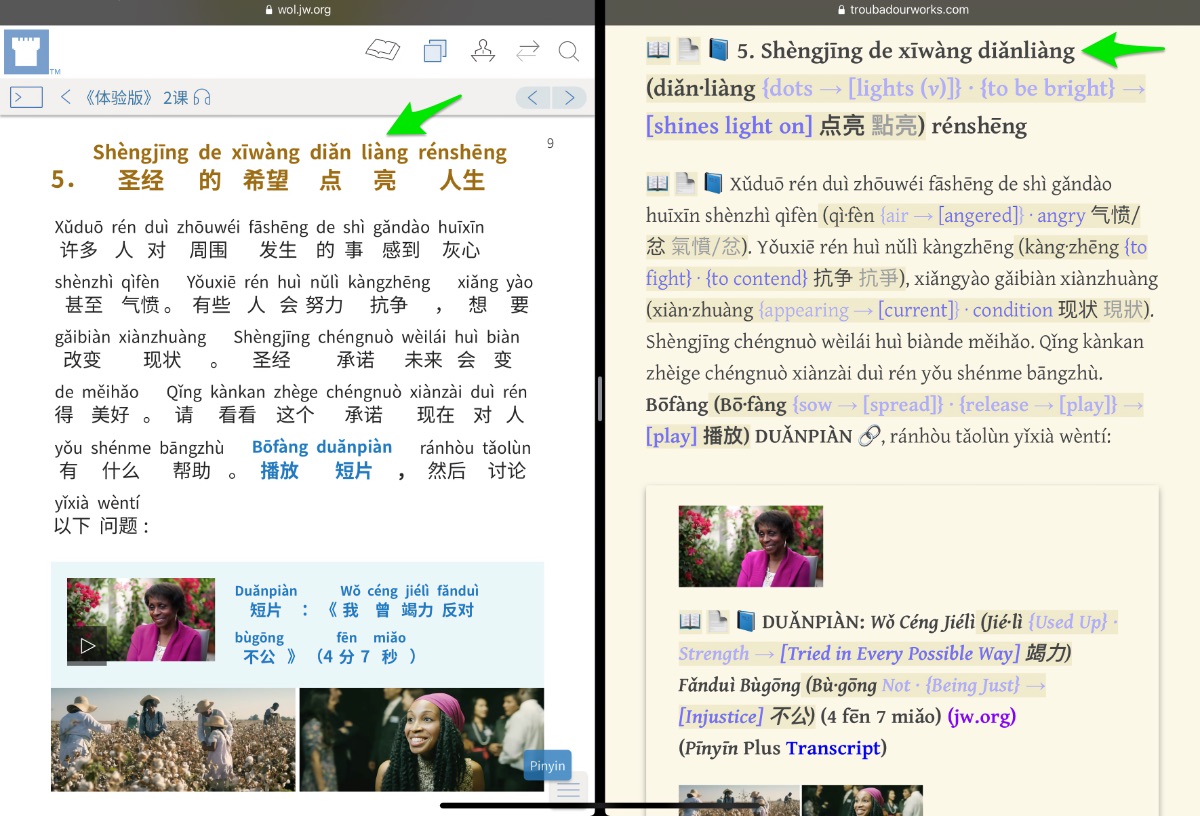
“Diǎnliàng” in _Enjoy Life Forever!_ br., Lesson 2 Point 5 (WOL CHS+Pinyin, _Pīnyīn_ Plus)


Comments are enabled on this blog, so if you are so inclined, comment away!


A news feed for this blog is available here.


Thursday, November 10, 2011

Standard Mandarin 2 Released

Standard Mandarin is a computer program created by Br. Joel Hansen that helps people to learn Mandarin pronunciation. The Links file has included a link for Standard Mandarin for a long time, and now a new version, version 2, is available. So, this updated description for Standard Mandarin will appear in the next update to the Links file:

http://www.standardmandarin.dk/

The official home of Standard Mandarin, a Windows / Mac OS X program with audio, visual, and text aids to help with pronunciation. Be sure to fill out the form on the website for requesting a download link, and mention that you learned about the site from this Links file so that you will be emailed a link for a free download.

Note that Standard Mandarin is now at version 2.x.

More information on Standard Mandarin can be found at http://www.standardmandarin.com/. However, make sure you go to http://www.standardmandarin.dk/ to fill out a form to request a link for a free download, mentioning that you learned about the site from the Links file, as mentioned above.

Wednesday, December 19, 2007

Alguns Conselhos para os que Ensinam e Aprendem Chinês

Note: This post contains a Portuguese translation of the previous post. Thanks to the one who provided the translation.


Recentemente, ao preparar um curso de Mandarim para os interessados no campo Chinês, um irmão me pediu para compartilhar quaisquer dicas e conselhos sobre o assunto. Abaixo estão os pontos compartilhados, baseados em minha própria experiência como professor e estudante de Mandarim, que também está de acordo com aqueles em que conversei com experiência no processo do aprendizado do Mandarim. (Na maioria das vezes estes pontos também se aplicam ao Cantonês.) Espero que estas dicas sejam realmente de ajuda.


  • Enfatize a necessidade de aprender muito bem o pinyin e os tons bem no começo, e de ser disciplinado em dominá-los com precisão.

    • Isto servirá de alicerce sobre como os estudantes irão ouvir e falar Mandarim. Se o alicerce de uma casa não for lançado corretamente, a estrutura inteira sofrerá todos os dias depois disto.

    • Especialmente para os estudantes que nunca antes estiveram expostos aos diferentes sons e tons do Mandarim, em que o início é quando os estudantes estão formando hábitos no idioma, é que um pouco mais de esforço e tempo gasto em aprender bem no início pode ser útil em poupar anos de tempo e esforço em desaprender e superar maus hábitos e erros que de outra forma seria mais fácil.

    • Obter um bom “som” do Mandarim é como aprender a tocar um novo instrumento musical. A pessoa tem que entender a teoria, mas também nada substitui a prática, porque os mecanismos físicos do corpo dela estão envolvidos – o mecanismo da audição da pessoa tem que aprender a distinguir corretamente os sons do Mandarim (Jó 12:11), e o mecanismo da fala e os músculos envolvidos, etc. tem que aprender a produzir estes sons. É exatamente a prática que faz com que estes mecanismos desenvolvam a “memória muscular”, terminais nervosos, etc. que os permitirá eventualmente a distinguir e produzir os sons corretos de modo inconsciente, assim como um bom pianista pode tocar mais rápido do que sua mente possa conscientemente guiar seus dedos, porque através da prática seus dedos “aprenderam” e “lembraram” por conta própria a como fazer.

  • Enfatize a necessidade dos estudantes a trabalharem nisto de modo regular, em arranjos contínuos para continuarem a aprender mesmo depois quando o curso acabar, talvez em algum projeto pessoal.

    • Tem se notado a tendência que alguns estudantes de Mandarim progridem até certo nível, fruto do curso inicial de Mandarim, daí “estacionam” ou até mesmo regridem depois disto por que não fizeram nada em específico para conter esta tendência.

  • “Use-o ou perca-o” tem se provado veraz em se aprender e usar línguas.

    • O progresso persistente por um bom período de tempo, mesmo que lento, acrescenta muito. Isto tem dado melhores resultados do que um progresso rápido em um curto período de tempo, seguido por negligência—o estudante deve ser como a tartaruga, não como a lebre.

    • Por outro lado, alguns acham que não estão fazendo muito progresso, mesmo que estejam tentando já por um bom tempo. Na verdade, provavelmente devem estar progredindo gradualmente mesmo sem notar. Por exemplo, se alguém olhar continuamente para um relógio analógico que possui apenas os ponteiros da hora e minutos, vai parecer que não está se movimentando. Contudo, se a pessoa se ocupar com outra coisa e mais tarde olhar para o relógio, se o mecanismo do relógio tiver funcionando, ela vai ver claramente que o relógio se movimentou. Assim é progredir em aprender o Mandarim, se mantermos o mecanismo do aprendizado funcionando, o progresso é automático.

Tuesday, December 11, 2007

Advice for Those Teaching and Learning Chinese

Recently, a br. preparing to put together a Mandarin course for those interested in the Chinese field asked me to share with him any advice I had to give. The points I shared with him, based on my own years of experience as a Mandarin teacher and student, and that I find are agreed upon by those I've spoken to with experience in the Mandarin-learning process, are below. (The points generally apply for Cantonese as well.) I hope they will be found to be helpful.


  • Emphasize the need to learn the pinyin and the tones very well from the very start, and to be disciplined about getting them right.

    • These are the foundation for how the students will hear and speak Mandarin. If the foundation of a house is not laid right, the whole structure will suffer every day after that.

    • Especially for students who have not been exposed to the alien sounds and tones of Mandarin before, the beginning is when students are forming habits re the languages, and a little extra time and effort spent getting it right at the beginning can save possibly years of time and effort unlearning and overcoming bad habits and errors that would otherwise be picked up.

    • Getting good at the “sound” of Mandarin is like learning a new musical instrument. One has to understand the theory, but there is also no substitute for “hands-on” practice, because physical mechanisms of one’s body are involved—one’s hearing mechanism has to learn to properly distinguish the sounds of Mandarin (Job 12:11), and one’s speech mechanism and the involved muscles, etc. have to learn to produce those sounds. Practice is what allows those mechanisms to develop the “muscle memory”, nerve connections, etc. that will allow them to eventually distinguish and produce the right sounds without conscious thought, like a good pianist can play faster than his mind can consciously guide his fingers, because through practice his fingers have “learned” and “remembered” on their own how to do so.

  • Emphasize the need for the students to work out regular, ongoing arrangements for themselves to keep learning after the course is over, perhaps by choosing projects for themselves.

    • Some have noticed a tendency for Mandarin students to progress to a certain level as a result of their initial Mandarin course, then “plateau” or even gradually decline after that if they don’t do anything specific to counter it.

  • “Use it or lose it” has been found to truly apply to learning and using languages!

    • Persistent progress over an extended time, even if it's slow, adds up. That ends up with better results than quick progress for a short time, followed by neglect—one should be like the tortoise, not the hare.

    • Some may feel that they are not making much progress, even though they have been trying for an extended time. Actually, they probably have been making gradual progress without noticing it. E.g., as one stares at an analogue clock with just hour & minute hands, it does not seem to be moving. However, if one gets busy with something and checks back later, as long as the clock mechanism was working, one will see that the clock hands have indeed moved. Progress in Mandarin can be like that, as long as we have a learning mechanism set up and it keeps working.


Update: There is a very good article that language-learners should read in the January 8, 2000, issue of Awake!, pages 12-13, called “You Can Learn Another Language!”. It is currently online here.


Update: This subject is explored in more depth in the “General Advice for Those Teaching and Learning Chinese” series of posts over at tiandi.info, starting with this one.