MEotW: Gōngyè‐Dǎng
The Mandarin Expression of the Week is:
In the grand scheme of things, how important is technology?
Comments are enabled on this blog, so if you are so inclined, comment away!
A news feed for this blog is available here.
The Mandarin Expression of the Week is:
In the grand scheme of things, how important is technology?
Comments are enabled on this blog, so if you are so inclined, comment away!
A news feed for this blog is available here.
The Mandarin Expression of the Week is:
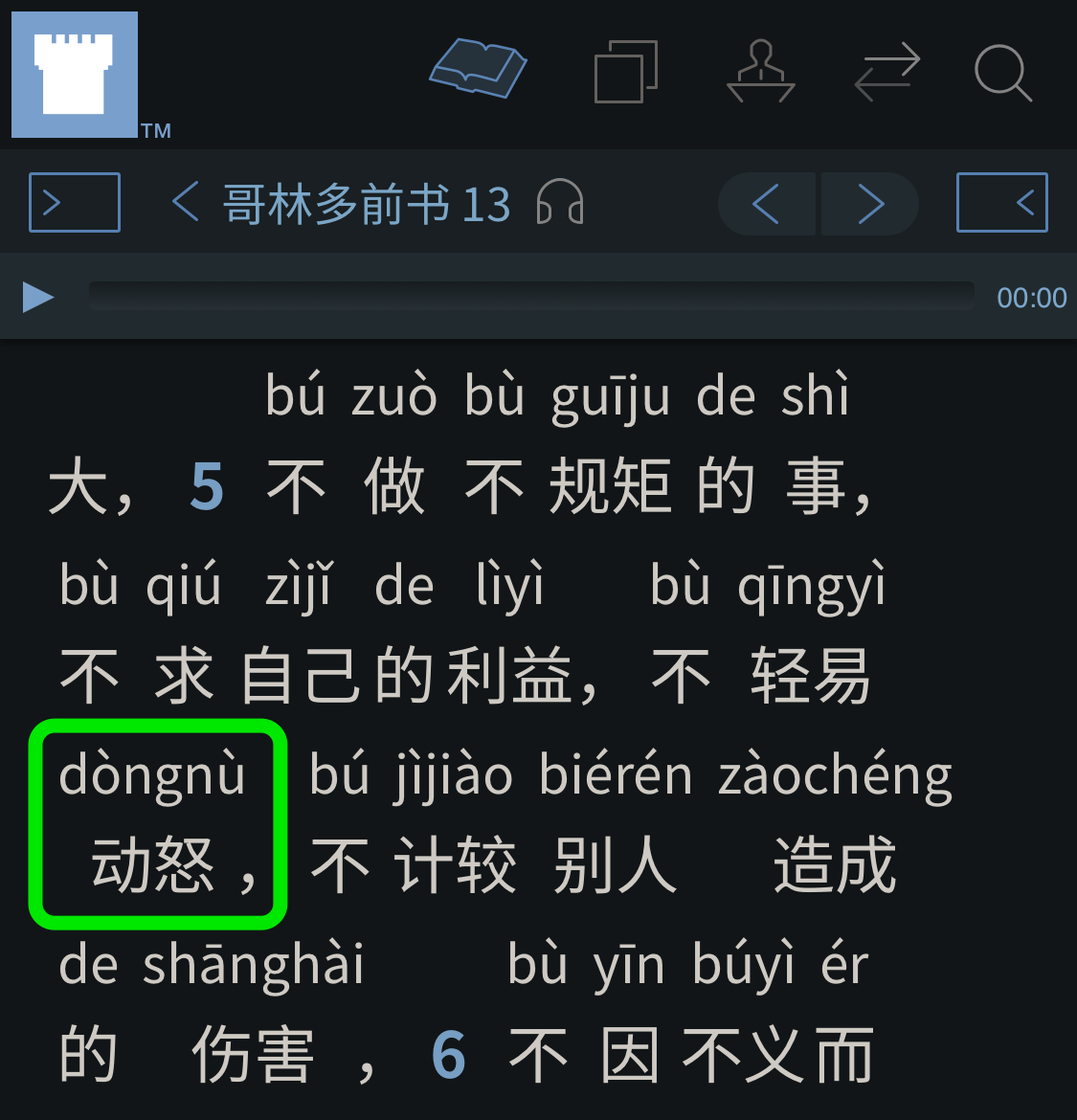
Is anger an appropriate reaction to the suggestion to focus less on characters and more on Pīnyīn?
Comments are enabled on this blog, so if you are so inclined, comment away!
A news feed for this blog is available here.
The Mandarin Expression of the Week is:
As beloved as they are by many, why have there been serious, concerted efforts to simplify and replace traditional Chinese characters?
“愛” is the Traditional Chinese character for “love”. It appropriately has the “heart” radical (“心”) in it, but it’s quite…complicated. 😓
— Troubadour WW (@troubadourww) February 20, 2017
Comments are enabled on this blog, so if you are so inclined, comment away!
A news feed for this blog is available here.
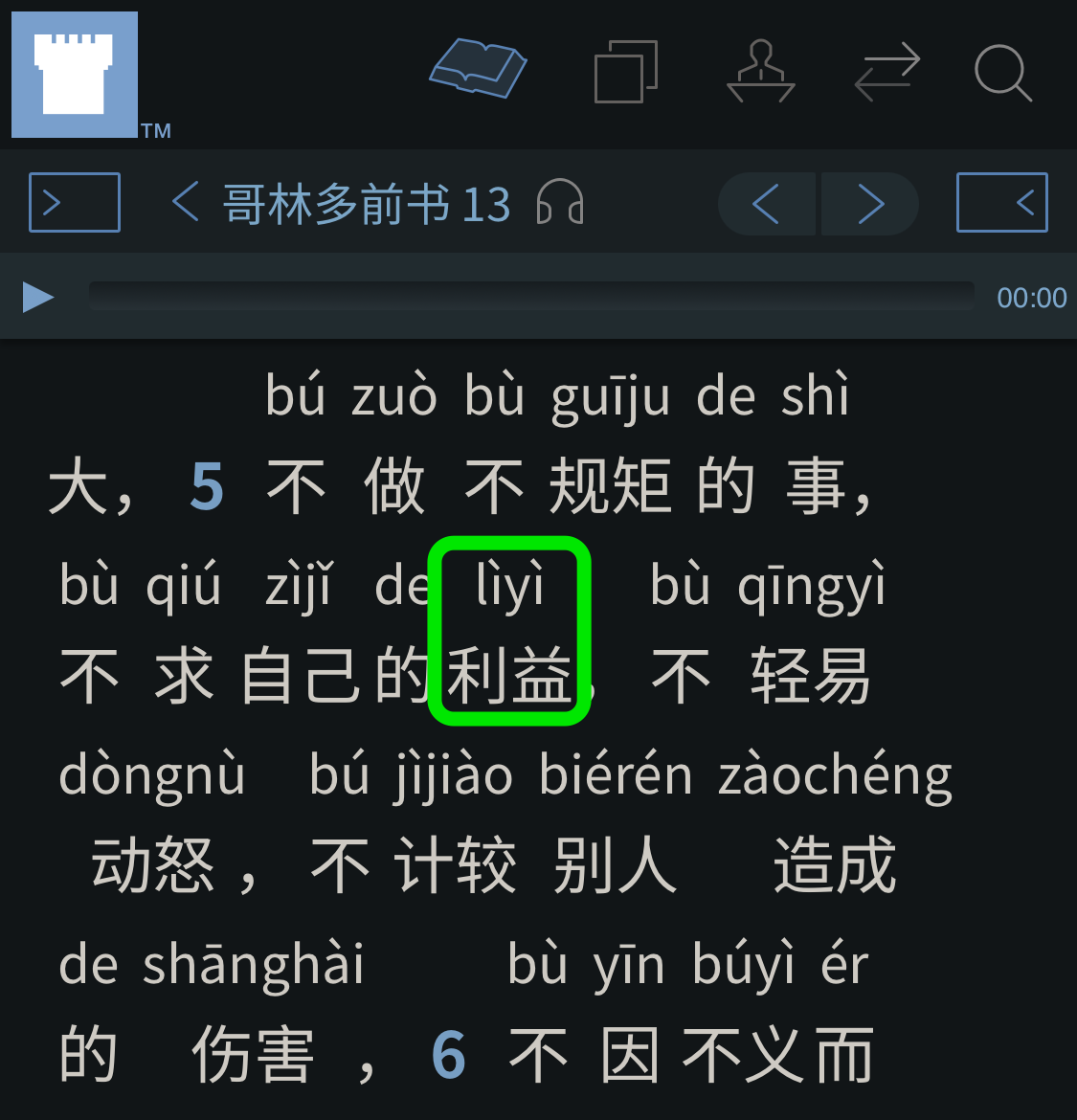
The Mandarin Expression of the Week is:
In the Mandarin field, how can we show love that “does not look for its own interests”?
Comments are enabled on this blog, so if you are so inclined, comment away!
A news feed for this blog is available here.
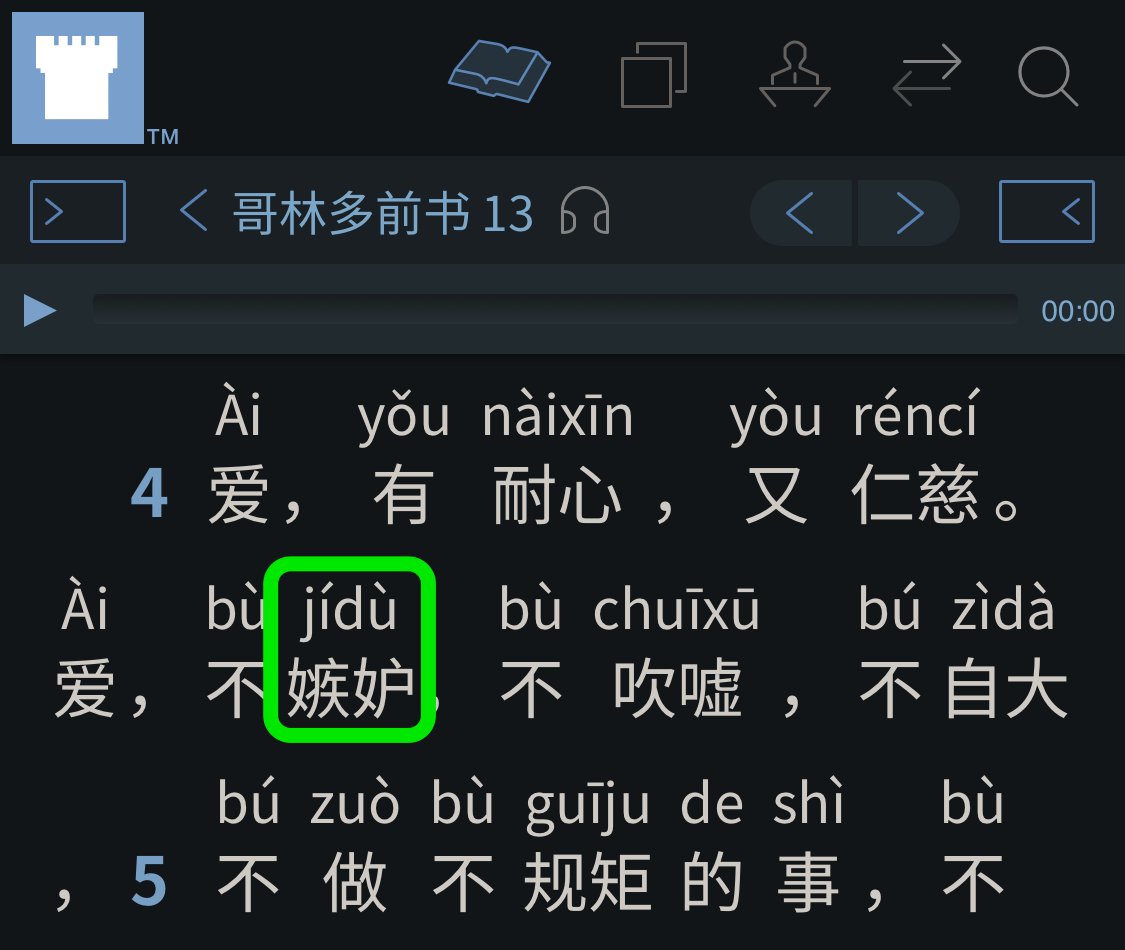
The Mandarin Expression of the Week is:
In the Mandarin field, what are some ways in which jealousy could affect us if we allow it to?
In God's organization, our unity is based on God's truth, not on human tradition.
— tiandi, Links News (@tiandilinksnews.bsky.social) February 2, 2025 at 8:27 AM
[image or embed]
Maybe this is connected to why so many Chinese people seem to think,
— Troubadour WW (@troubadourww) April 13, 2024
“I suffered with Chinese characters, so you must suffer with them too!”
rather than,
“I want you to use _Pīnyīn_ so you won’t have to suffer with Chinese characters like I did.” https://t.co/rgv337FoFi
Comments are enabled on this blog, so if you are so inclined, comment away!
A news feed for this blog is available here.
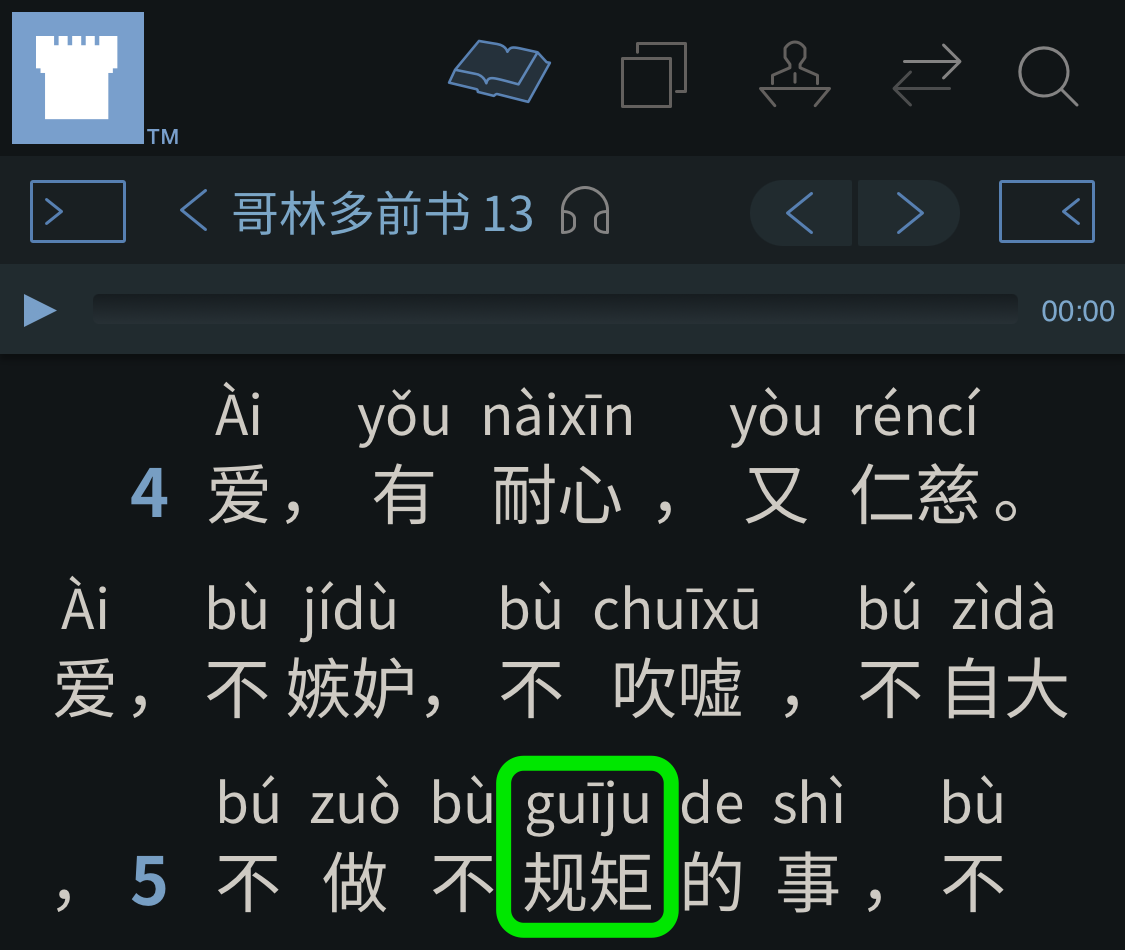
The Mandarin Expression of the Week is:
What connection does Chinese Braille have with Pīnyīn, and what does this tell us about Pīnyīn?
⠪⠆
— Troubadour WW (@troubadourww) January 5, 2021
is the (Mainland) Chinese Braille representation of
ài (love 爱 愛)
⠪ corresponds to “ai” in _Pīnyīn_, and
⠆ corresponds to 4th tone.
Blind Mandarin-speaking people need to read and write about love too! https://t.co/sXSVzycXre
“_Chinese Braille_…is in principle a conversion of _Hanyu Pinyin_ into braille letters…If braille is a script [writing system], which no one doubts, especially not blind people, then _Hanyu Pinyin_ must also be a script [writing system].” https://t.co/EpGCXe7OOp
— Troubadour WW (@troubadourww) January 5, 2021
Blind Chinese people cannot see Chinese characters, but they can still read and write Mandarin with _Chinese Braille_.
— Troubadour WW (@troubadourww) January 5, 2021
_Chinese Braille_ is based on _Pīnyīn_—they both represent the sounds of Mandarin.
Since _Chinese Braille_ is obviously a writing system, so is _Pīnyīn_.
Many claim that _Pīnyīn_ shouldn’t be used as a writing system because characters are required to avoid confusion from all the homophones (different words that sound the same) in Mandarin.
— Troubadour WW (@troubadourww) April 8, 2025
If that’s true, then people shouldn’t SPEAK Mandarin either! But many do, and it’s fine. pic.twitter.com/1MK0ERuFjc
Comments are enabled on this blog, so if you are so inclined, comment away!
A news feed for this blog is available here.

The Mandarin Expression of the Week is:
In the Mandarin field, how can we avoid acting indecently in God’s eyes?
In God's organization, our unity is based on God's truth, not on human tradition.
— tiandi, Links News (@tiandilinksnews.bsky.social) February 2, 2025 at 8:27 AM
[image or embed]
Comments are enabled on this blog, so if you are so inclined, comment away!
A news feed for this blog is available here.
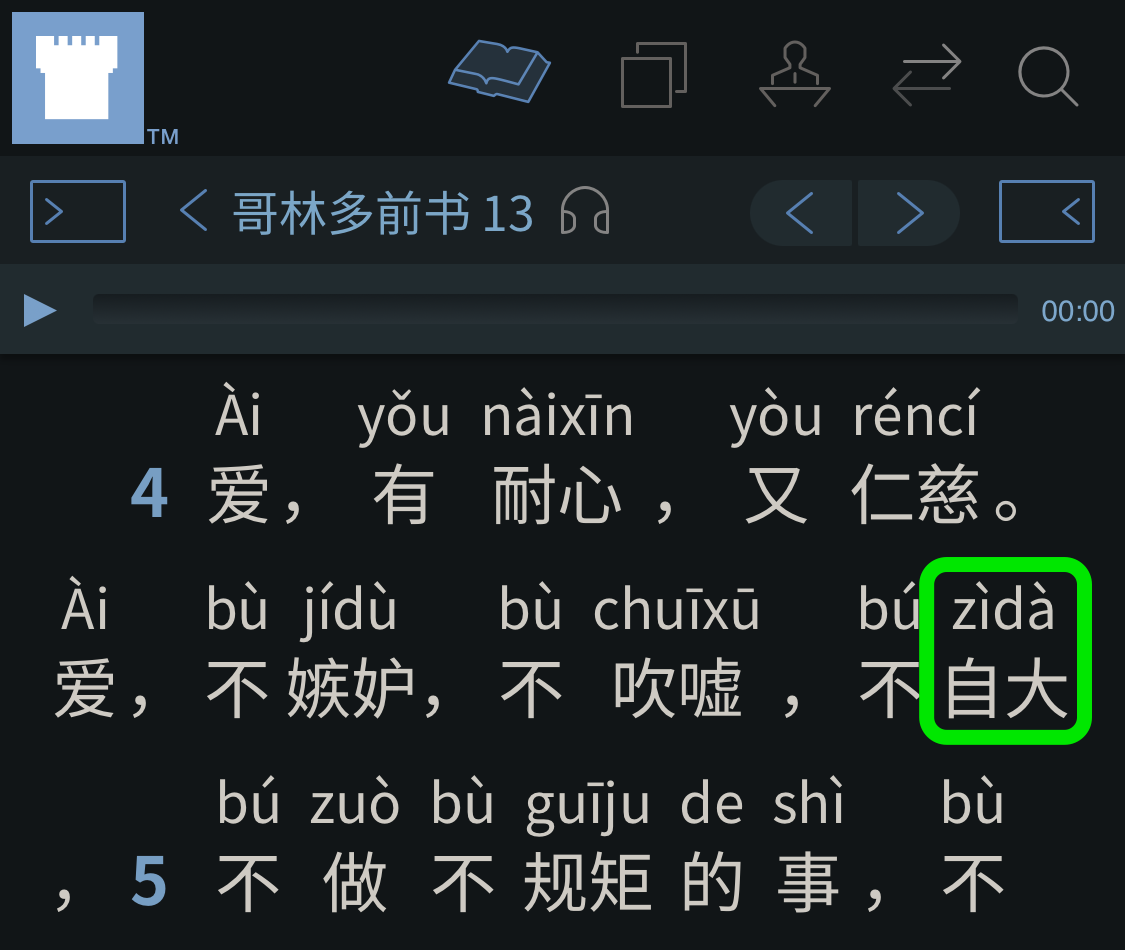
The Mandarin Expression of the Week is:
Who is Lǐ Huá? Why have so many Chinese people and American people been talking about Lǐ Huá on the Chinese social media app Xiǎohóngshū (RedNote)?
Learning Mandarin out of spite? You're not alone.
— Duolingo (@duolingo) January 15, 2025
We’ve seen a ~216% growth in new Chinese (Mandarin) learners in the US compared to this time last year. https://t.co/9hzwBxfTgD pic.twitter.com/qWM9f5oFYA
Comments are enabled on this blog, so if you are so inclined, comment away!
A news feed for this blog is available here.
The Mandarin Expression of the Week is:
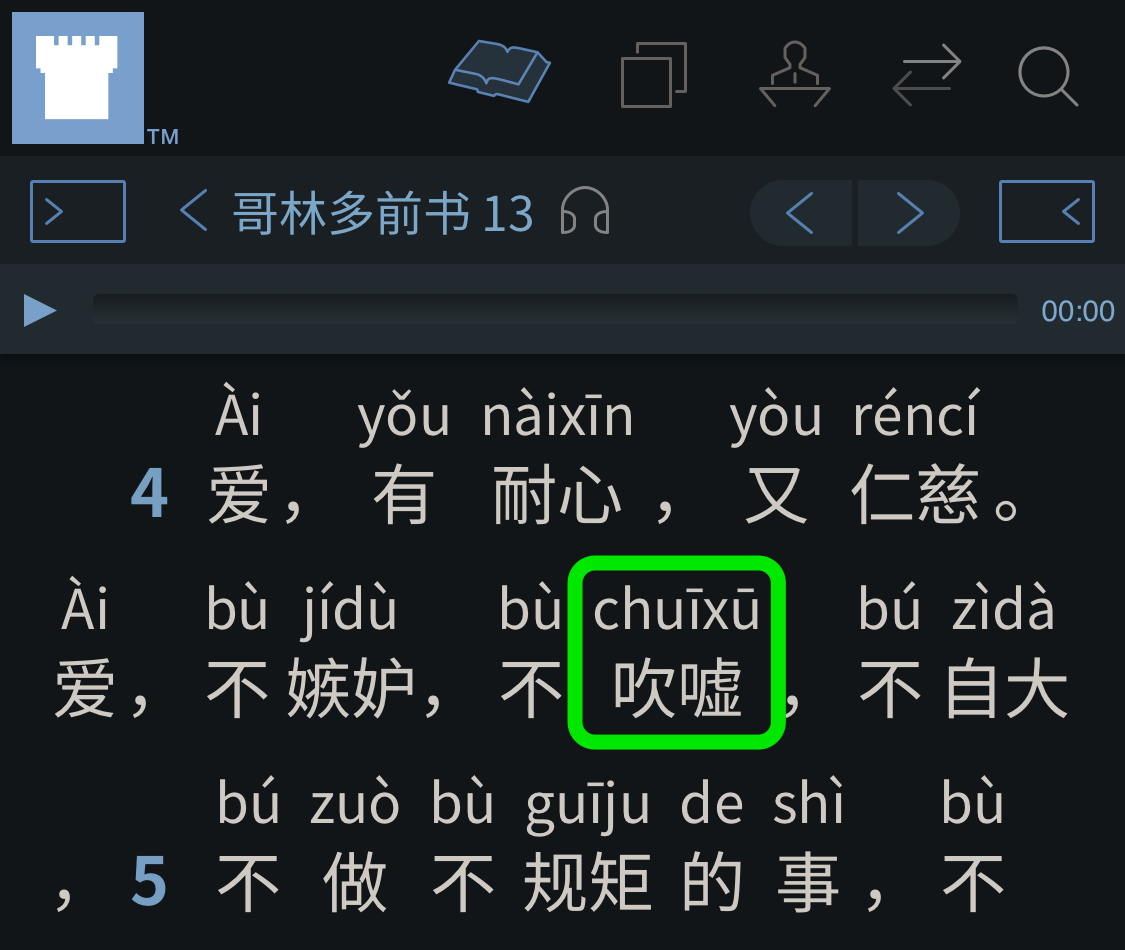
In the Mandarin field, how can we avoid being inferior B players or unserious tourists?
China relegating _Pīnyīn_ to being just a pronunciation aid for characters is like a company hiring a talented A player executive and then making that person just get coffee for the CEO, because the established power base’s top priority is to preserve itself—B players in action. https://t.co/fNHsBWEsWO
— Troubadour WW (@troubadourww) May 15, 2024
Comments are enabled on this blog, so if you are so inclined, comment away!
A news feed for this blog is available here.
The Mandarin Expression of the Week is:
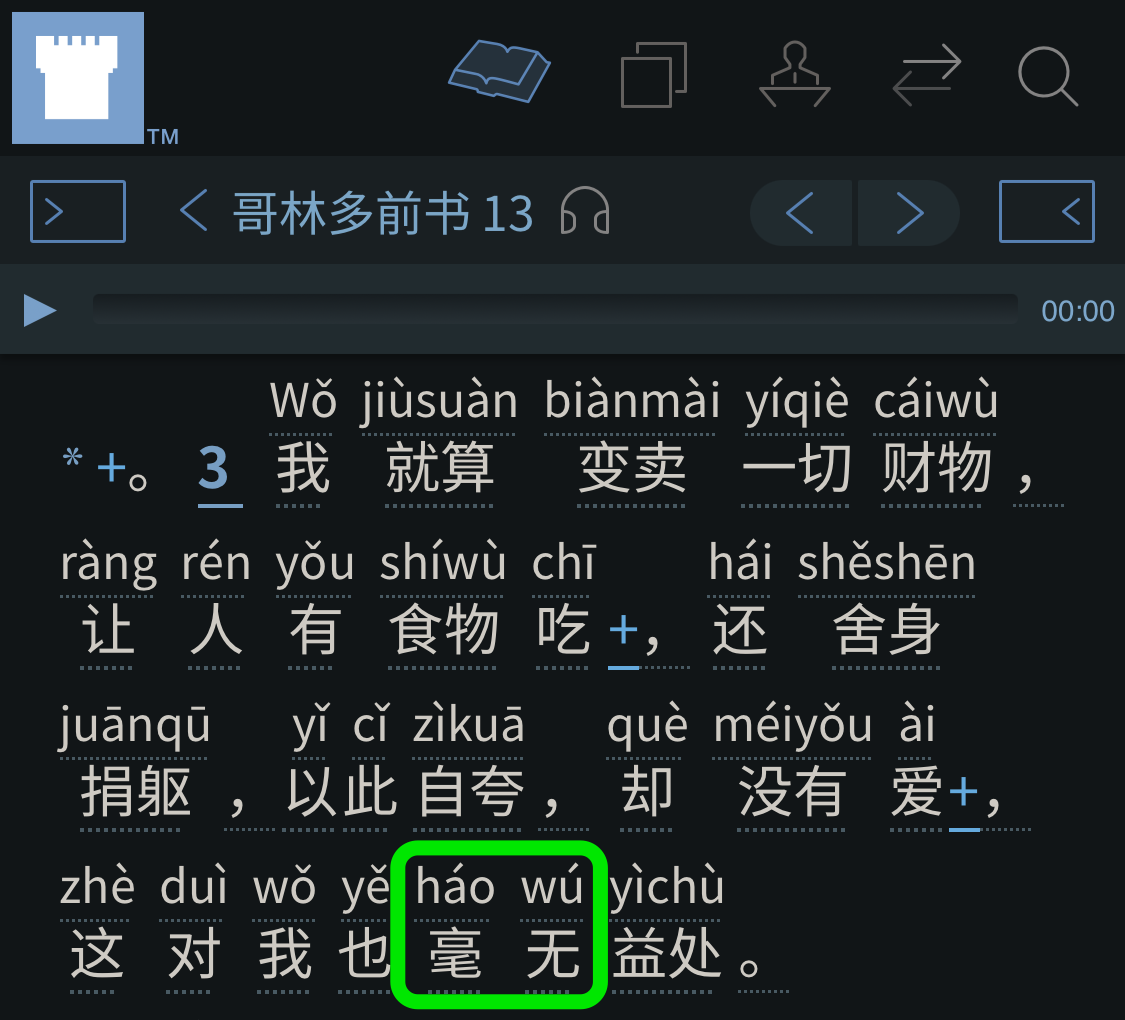
Might Chinese characters present a test for Mandarin field language learners? If so, what might they test?
Comments are enabled on this blog, so if you are so inclined, comment away!
A news feed for this blog is available here.
The Mandarin Expression of the Week is:
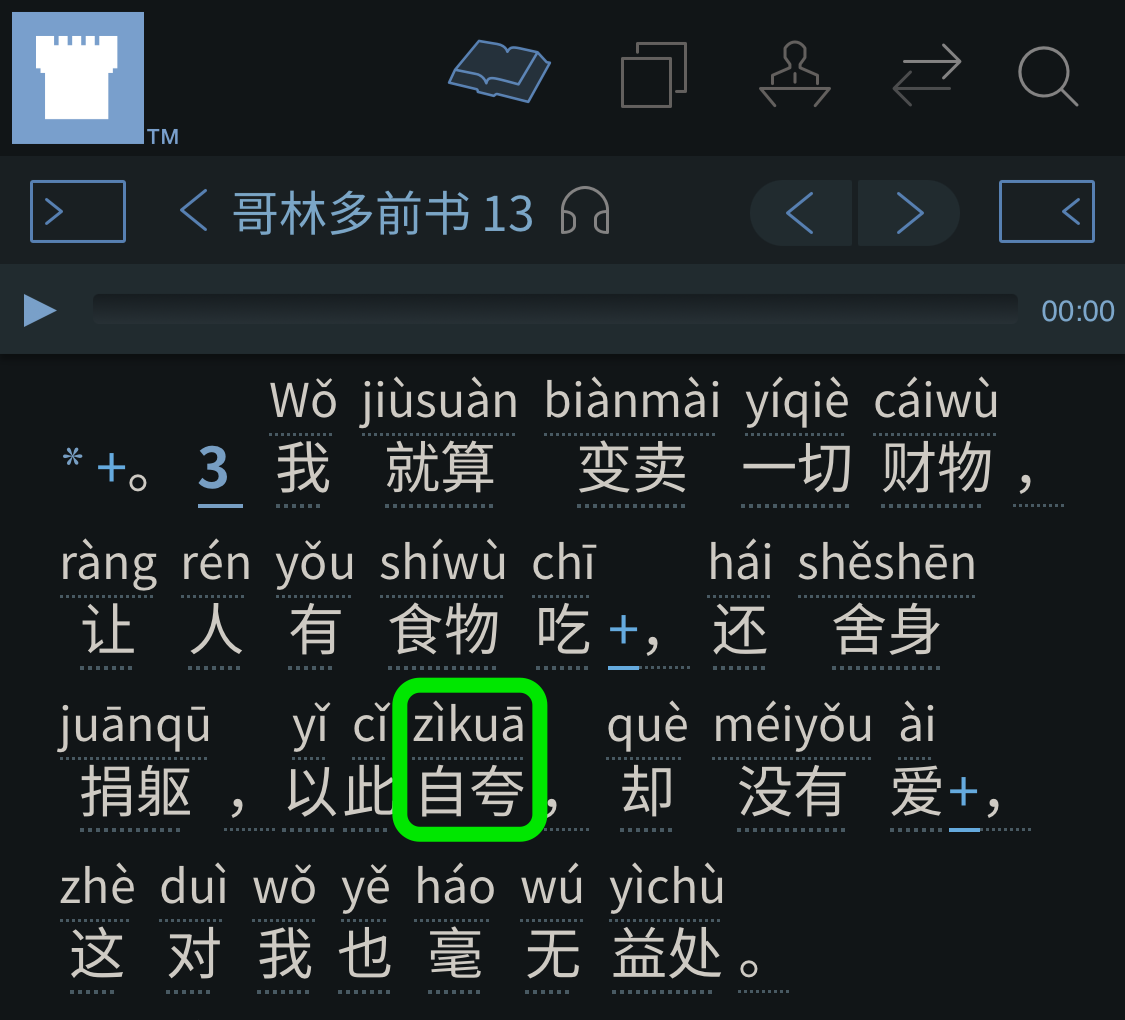
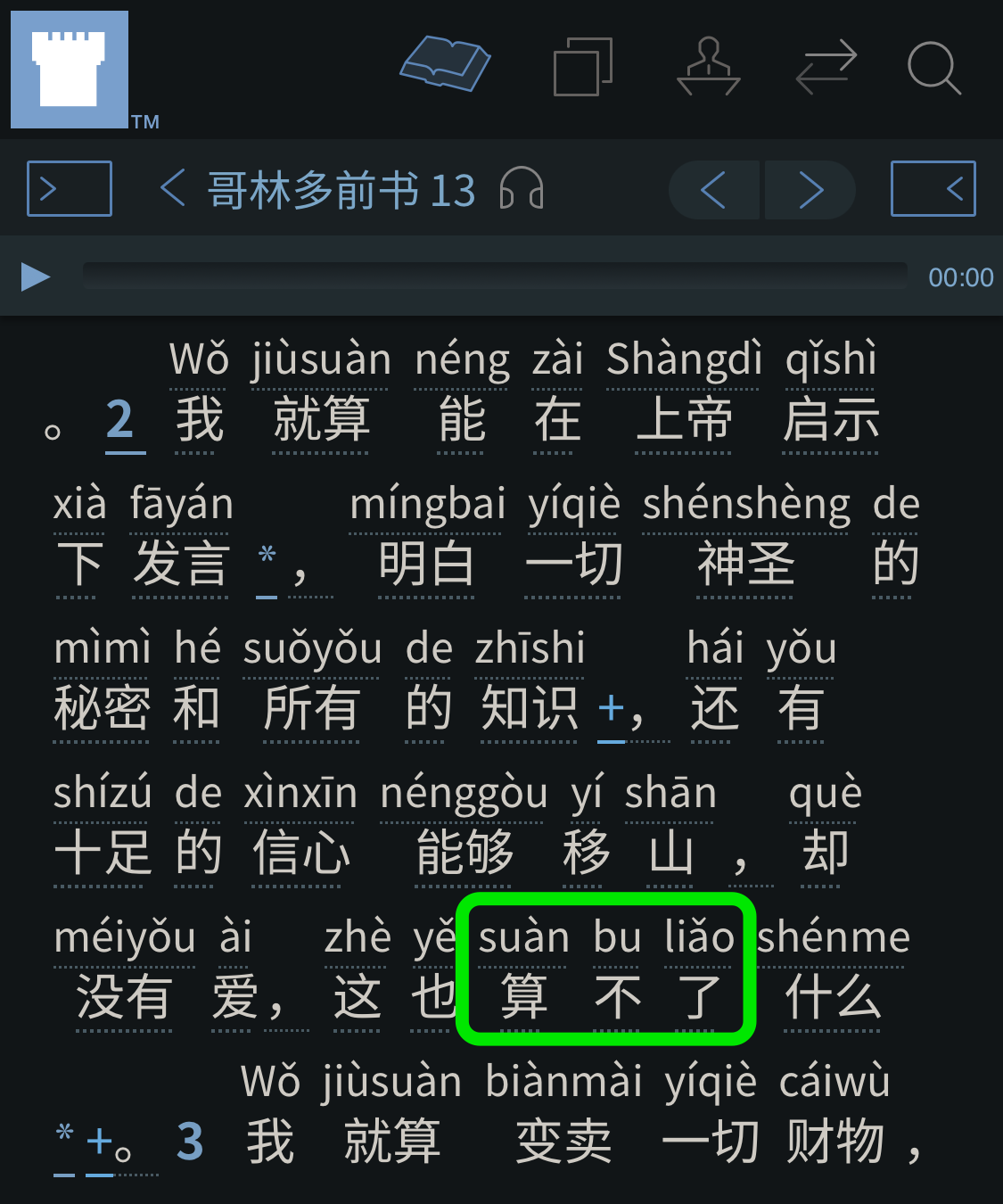
How does the Mandarin NWT Bible’s translation of 1 Corinthians 13:3 emphasize to us how futile it is to do things out of pride and not out of love?
Comments are enabled on this blog, so if you are so inclined, comment away!
A news feed for this blog is available here.
The Mandarin Expression of the Week is:
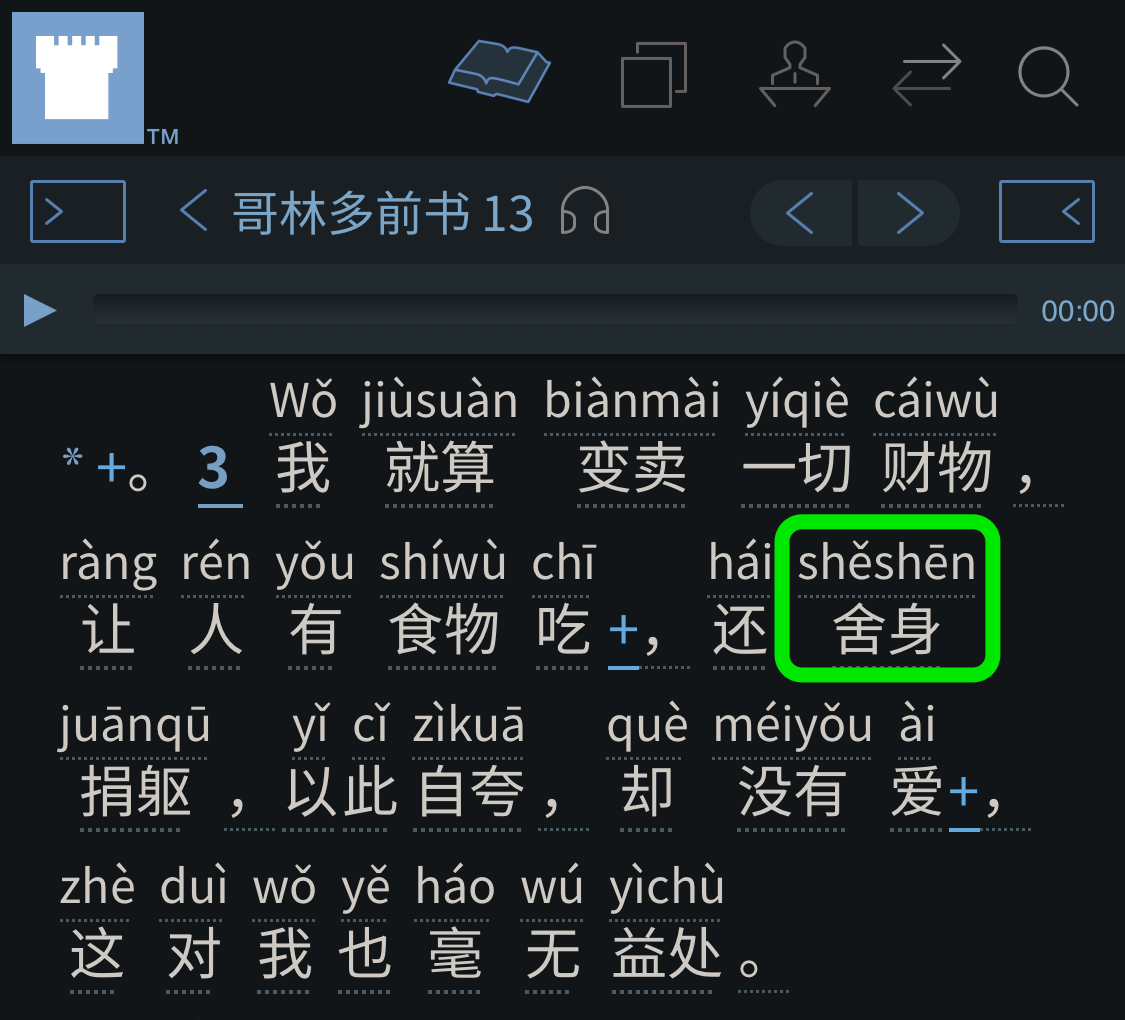
Is Jehovah God impressed by one who boasts about having deep knowledge of Chinese characters?
Comments are enabled on this blog, so if you are so inclined, comment away!
A news feed for this blog is available here.
The Mandarin Expression of the Week is:
How might collectivism and zero-sum thinking be connected to the obsessive attachment many have to Chinese characters?
Maybe this is connected to why so many Chinese people seem to think,
— Troubadour WW (@troubadourww) April 13, 2024
“I suffered with Chinese characters, so you must suffer with them too!”
rather than,
“I want you to use _Pīnyīn_ so you won’t have to suffer with Chinese characters like I did.” https://t.co/rgv337FoFi
Comments are enabled on this blog, so if you are so inclined, comment away!
A news feed for this blog is available here.
The Mandarin Expression of the Week is:
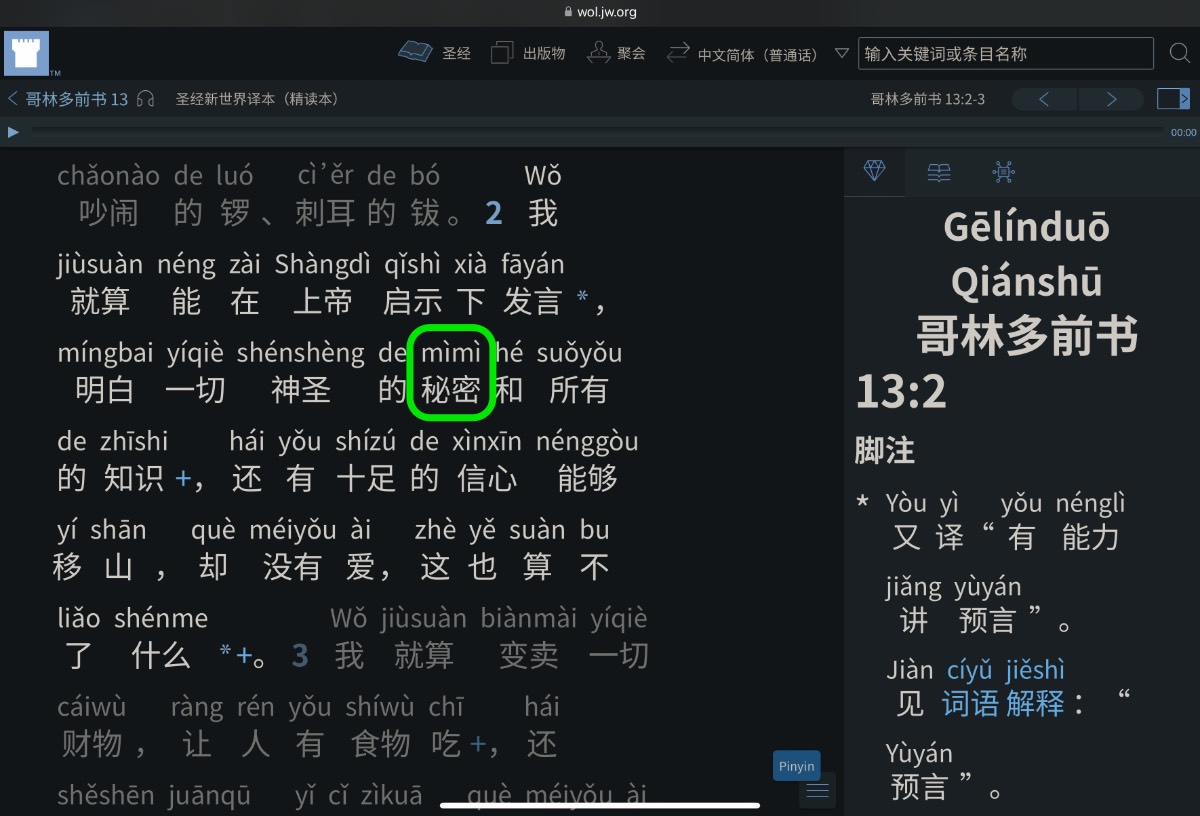
Are Chinese characters worthy and good just because they’re hard?
Comments are enabled on this blog, so if you are so inclined, comment away!


A news feed for this blog is available here.
The Mandarin Expression of the Week is:
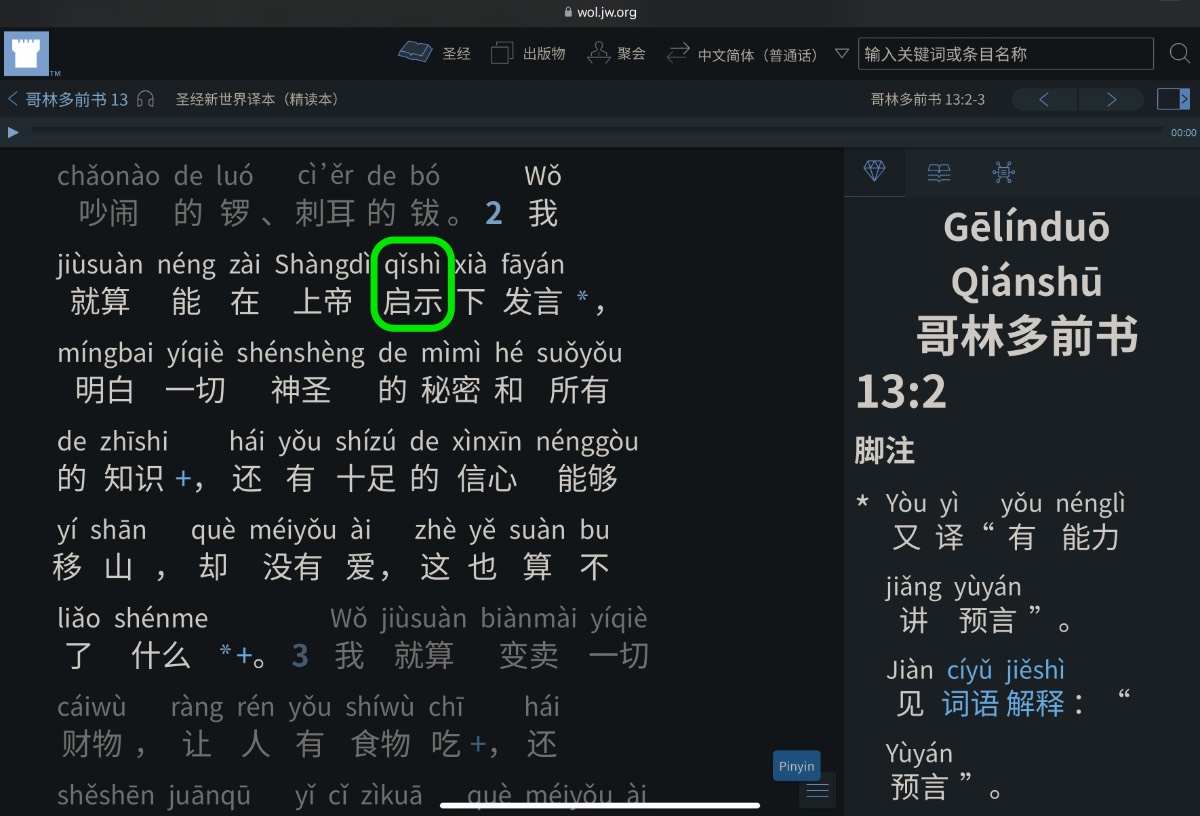
In the Chinese fields, is it enough to just fill our minds with knowledge about Chinese characters?
Comments are enabled on this blog, so if you are so inclined, comment away!
A news feed for this blog is available here.
The Mandarin Expression of the Week is:
Critics of Pīnyīn like to talk about the different words in Mandarin that sound the same, but what about the different Mandarin words that are written with the same characters?

Comments are enabled on this blog, so if you are so inclined, comment away!
A news feed for this blog is available here.
The Mandarin Expression of the Week is:
Ultimately, in the Chinese fields, how valuable or not valuable is knowledge of the secrets of Chinese characters?

Comments are enabled on this blog, so if you are so inclined, comment away!
A news feed for this blog is available here.
The Mandarin Expression of the Week is:
Is it better to be inspired or to have love?

Comments are enabled on this blog, so if you are so inclined, comment away!
A news feed for this blog is available here.
The Mandarin Expression of the Week is:
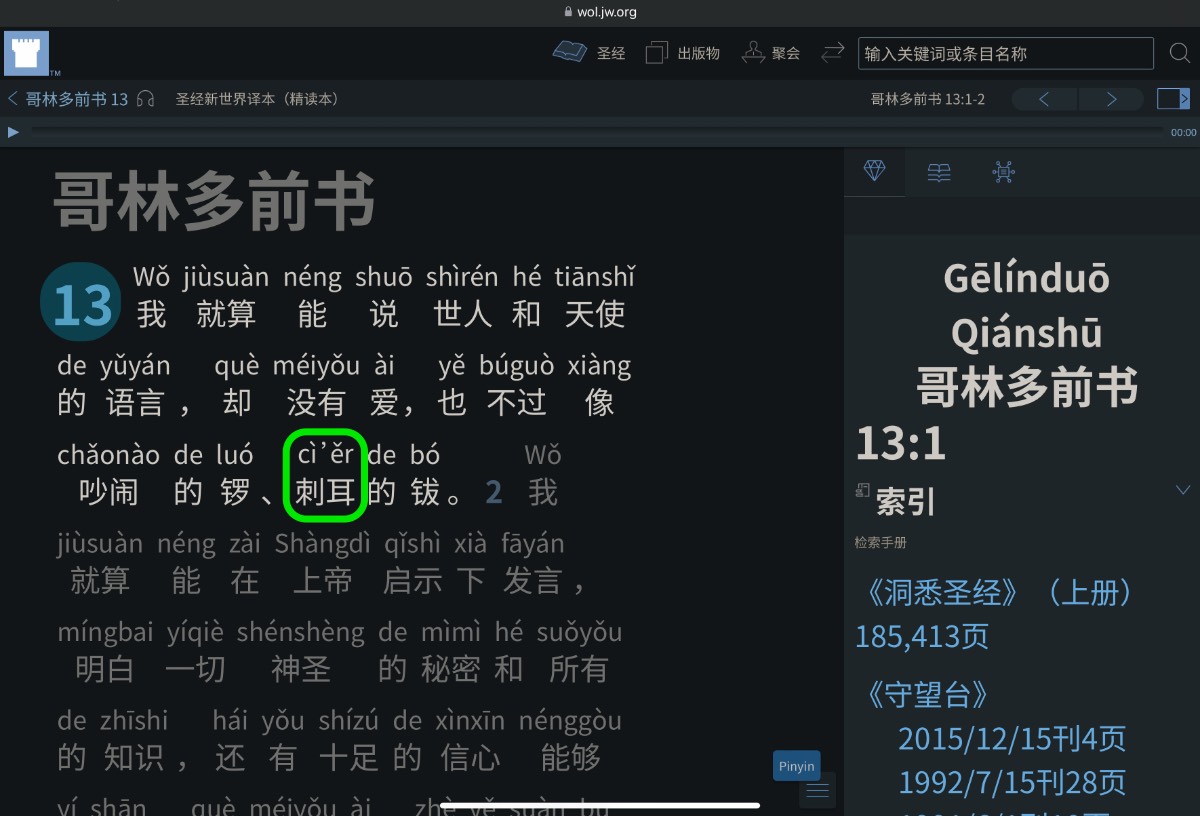
How can we avoid being a “clashing cymbal” in the Mandarin field?

Comments are enabled on this blog, so if you are so inclined, comment away!
A news feed for this blog is available here.
God is love, and as his people, we should always ask ourselves if we are acting out of pride or out of love.
— tiandi, Links News (@TiandiLinksNews) September 6, 2022
This is especially so since we know that if we have all the traditional knowledge and know all the Chinese characters, but do not have love, we are nothing.—1 Co. 13:1–3. https://t.co/OrWuuyH9Qm