Showing posts with label homographs. Show all posts

Sunday, August 02, 2026

MEotW: jǐngrán‐yǒuxù

The Mandarin Expression of the Week is:
In contrast to the haphazardly evolved Chinese characters, how is Pīnyīn well-designed, neat, and orderly, like the manufacturing processes inside our cells?


Comments are enabled on this blog, so if you are so inclined, comment away!


A news feed for this blog is available here.


Sunday, April 12, 2026

MEotW: záluàn‐wú‐zhāng

The Mandarin Expression of the Week is:

While the manufacturing processes inside our cells are not haphazard, how is the design of Chinese characters haphazard?


Comments are enabled on this blog, so if you are so inclined, comment away!


A news feed for this blog is available here.

Wednesday, February 25, 2026

MEotW: Lǎhé

The Mandarin Expression of the Week is:

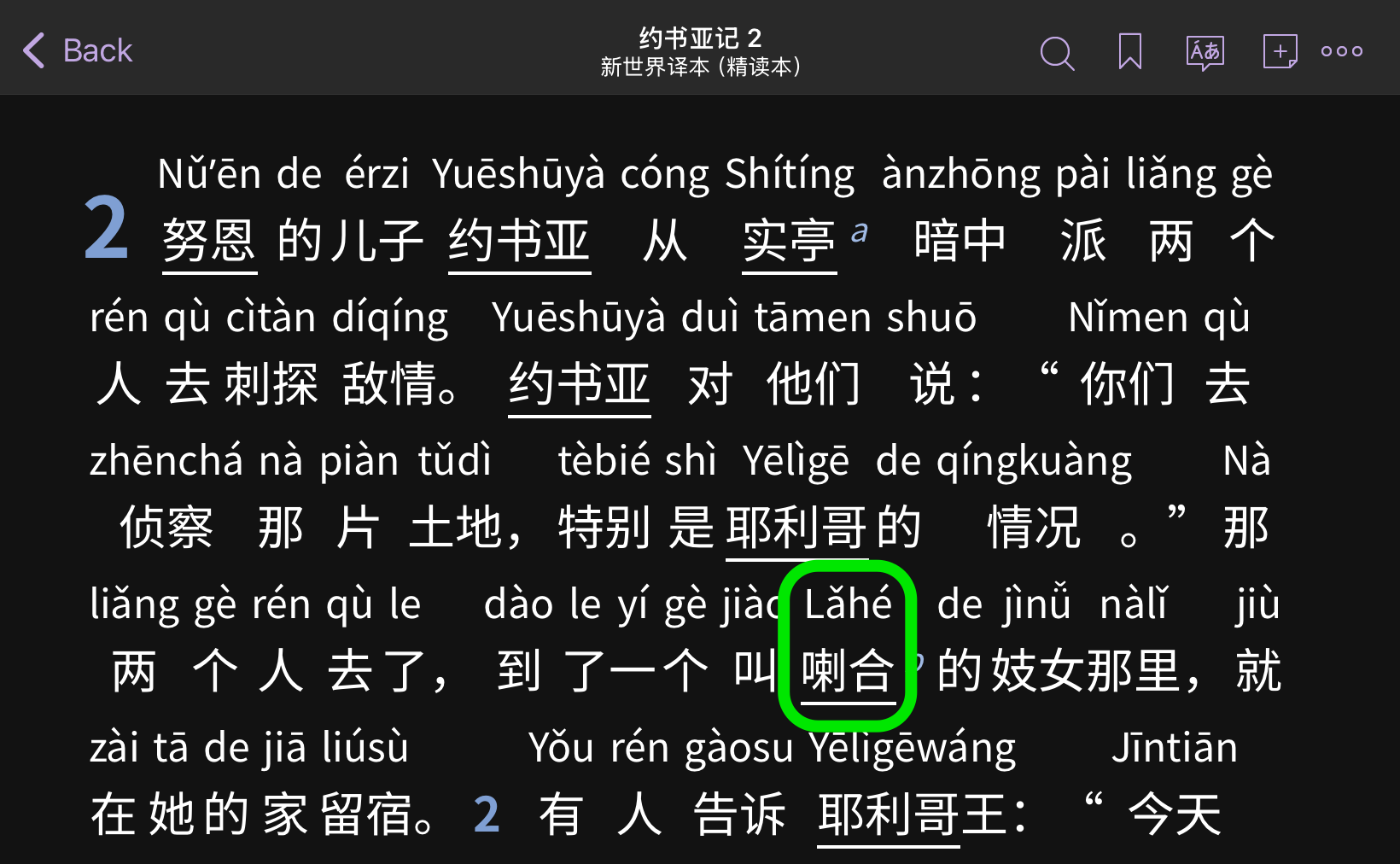
Is a character like “喇” really less ambiguous than a Pīnyīn expression like “lǎ”?


Joshua 2:1 in the Mandarin _NWT_ Study Bible, in the JW Library app

Joshua 2:1 in the Mandarin NWT Study Bible, in the JW Library app


Joshua 2:1 in the PDF for the old printed _Pīnyīn_ _NWT_ Bible

Joshua 2:1 in the PDF for the old printed Pīnyīn NWT Bible


Comments are enabled on this blog, so if you are so inclined, comment away!


A news feed for this blog is available here.

Sunday, February 15, 2026

MEotW: jìjiào

The Mandarin Expression of the Week is:

How do some nitpick about Pīnyīn while ignoring a huge issue about characters?


Screenshot of “_jìjiào_” in 1 Co. 13:5 (nwtsty, CHS+_Pīnyīn_ WOL)

Screenshot of “jìjiào” in 1 Co. 13:5 (nwtsty, CHS+Pīnyīn WOL)


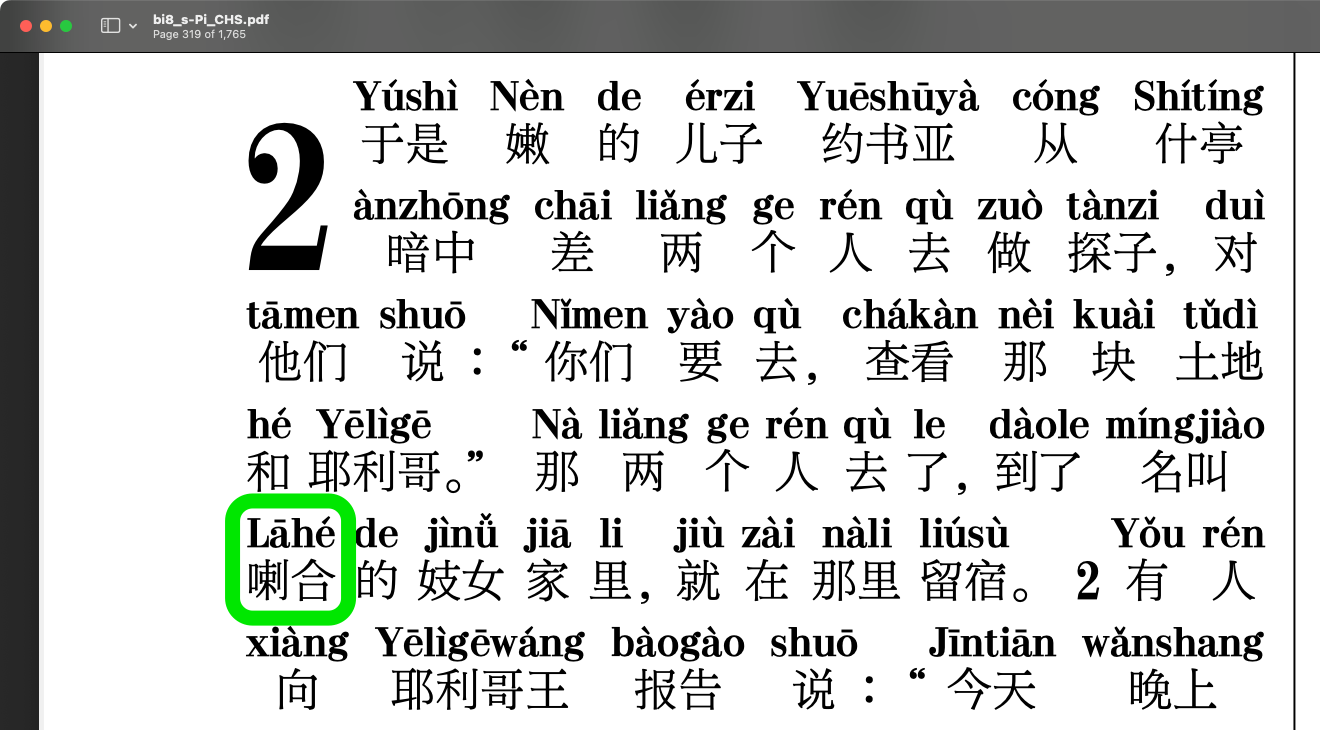
Lego diorama of people pushing a cart with square wheels, when the cart is filled with round wheels

The problem is not that Pīnyīn is like training wheels, because Pīnyīn is actually like regular wheels. The real problem is that characters are like square wheels!


Comments are enabled on this blog, so if you are so inclined, comment away!


A news feed for this blog is available here.


Sunday, January 25, 2026

MEotW: hélí

The Mandarin Expression of the Week is:

How can the beaver’s impressive industriousness and construction ability help us to reach the hearts of people in the Mandarin field?


Screenshot of article “The Beaver’s Construction Ability” on jw.org

A screenshot of the article “The Beaver’s Construction Ability” on jw.org


Comments are enabled on this blog, so if you are so inclined, comment away!


A news feed for this blog is available here.

Sunday, January 11, 2026

MEotW: bìyào

The Mandarin Expression of the Week is:

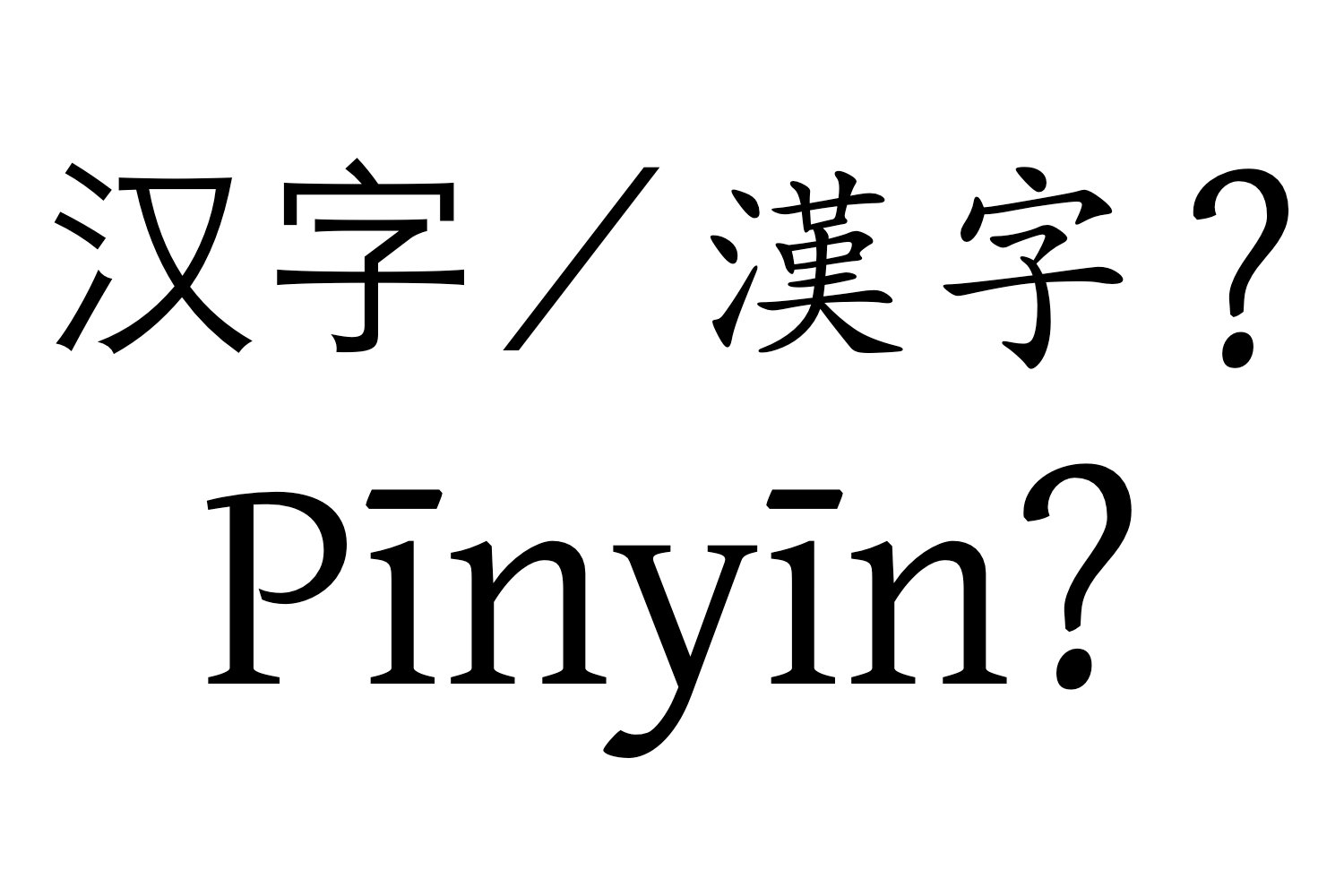
Are Chinese characters really indispensable? Is it really true that the Chinese languages cannot be written alphabetically?


汉字 / 漢字? Pīnyīn?


Comments are enabled on this blog, so if you are so inclined, comment away!


A news feed for this blog is available here.


Sunday, October 26, 2025

MEotW: zháole huǒ

The Mandarin Expression of the Week is:

Are homophones really a showstopper when it comes to using Pīnyīn to write Mandarin? How are homographs a similar problem for characters?


Comments are enabled on this blog, so if you are so inclined, comment away!


A news feed for this blog is available here.

Saturday, August 17, 2024

MEotW: hǎohāo[r]

The Mandarin Expression of the Week is:

Are Chinese characters the ultimate clarifiers of meaning in Mandarin? Also, what is the correct way to pronounce Mandarin’s “r” sound?


Comments are enabled on this blog, so if you are so inclined, comment away!


A news feed for this blog is available here.

Tuesday, December 26, 2023

MEotW: suàn buliǎo

The Mandarin Expression of the Week is:

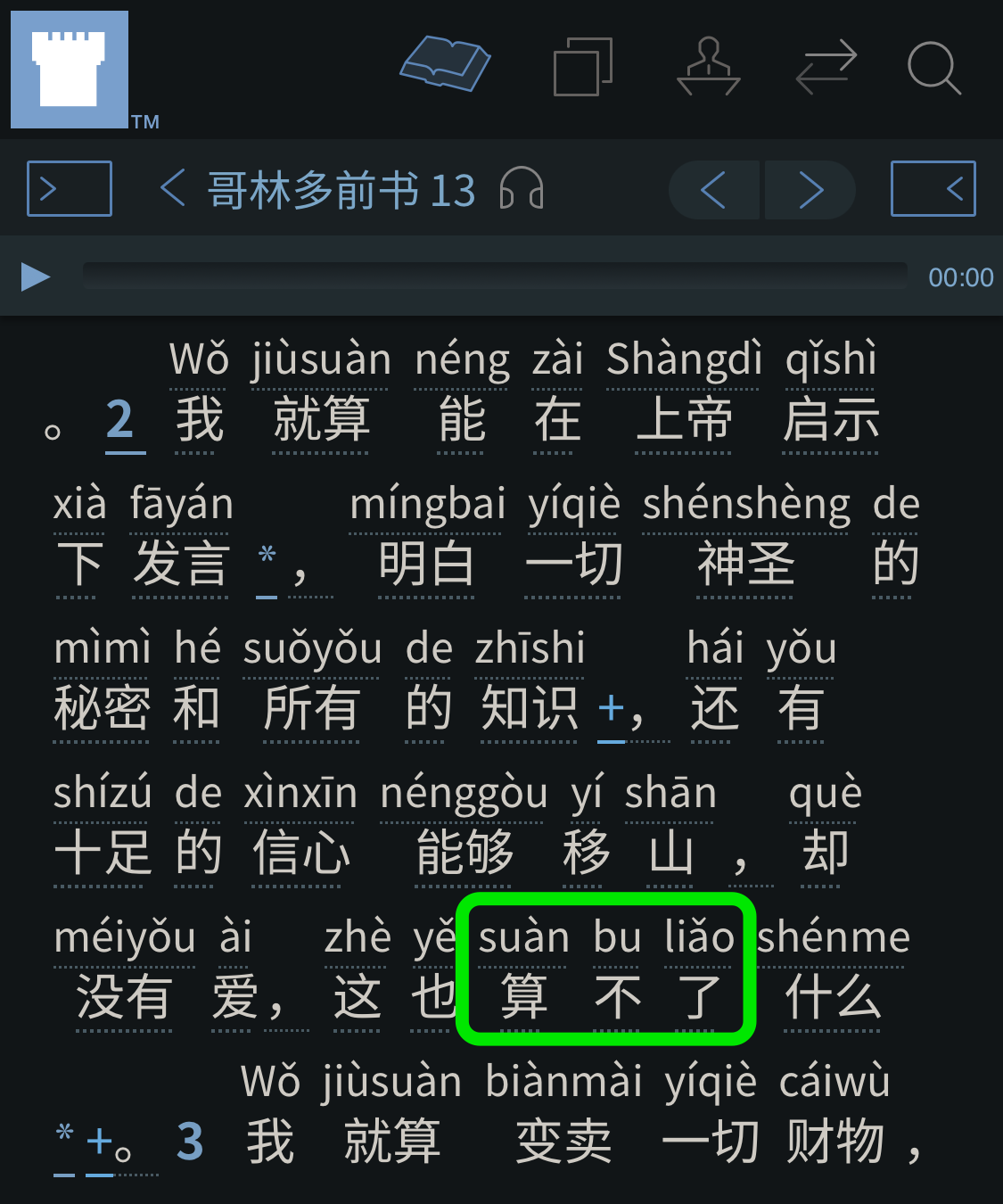
Critics of Pīnyīn like to talk about the different words in Mandarin that sound the same, but what about the different Mandarin words that are written with the same characters?


Screenshot of “_suàn buliǎo_” in 1 Co. 13:2 (nwtsty, CHS+_Pīnyīn_ WOL)


Comments are enabled on this blog, so if you are so inclined, comment away!


A news feed for this blog is available here.