Wednesday, January 30, 2019

Good News Br. Proofread Pīnyīn Plus Material Up to the End of Lesson 5, Question 1 Added

(NOTE: While the organization expresses valid general concerns expressed here about posting copies of official publications to the Internet, there are good legal and spiritual reasons for concluding that those concerns do not apply to this particular material, due to its particular nature and purpose. See this disclaimer for more information.)


Good News brochure proofread Pīnyīn Plus material covering up to the end of Lesson 5, Question 1 has been added to:

  • Good News Br.
    (Pīnyīn Plus, Scriptures, EPUB)

    (rich information about Mandarin speech
    for discussing basic Bible teachings,
    as represented by the text of the
    Mandarin Good News brochure,
    2018-03 Printing, proofread, mobile-friendly,
    flashcards integrated with the text,
    Pīnyīn (Pinyin) used as the default writing system,
    carefully done human-translated
    context-appropriate English translations
    with literal & effective meanings,
    Simplified & Traditional characters,
    📖 Reveal All, 📄 Reveal Advanced,
    and 📘 Reveal None controls for
    all the “flashcards” in a lesson, paragraph, etc.,
    links for getting around,
    picture thumbnails & links, audio links,
    video thumbnail & link,
    supports offline use & annotation)
  • Good News Br.
    (Pīnyīn Plus, Scriptures, Web)

    (rich information about Mandarin speech
    for discussing basic Bible teachings,
    as represented by the text of the
    Mandarin Good News brochure,
    2018-03 Printing, proofread, mobile-friendly,
    flashcards integrated with the text,
    Pīnyīn (Pinyin) used as the default writing system,
    carefully done human-translated
    context-appropriate English translations
    with literal & effective meanings,
    Simplified & Traditional characters,
    📖 Reveal All, 📄 Reveal Advanced,
    and 📘 Reveal None controls for
    all the “flashcards” in a lesson, paragraph, etc.,
    links for getting around,
    picture thumbnails & links, audio links,
    video thumbnail & link,
    Night Theme that can be turned on or off
    using the ☀️/🌙 button at the top right,
    adjustable text size)
    (Info re offline viewing and printing)
  • Short Links:
    Links > Publications > Brochures >
    Good News Brochure Links (tiandi.info/fg)

Partially proofread Pīnyīn and Pīnyīn Plus material:

  • Lesson 5, Question 2 to the end
  • Material with a grey background has been partially proofread. Pīnyīn material with a golden-hued background has been proofread, but not all of its “flashcards” have been added and proofread.

Pīnyīn Plus “flashcards” added for all expressions:

  • Up to the end of Lesson 6, Question 2

Pīnyīn Plus “flashcards” added for the more advanced expressions:

  • Up to the end of Lesson 12

More “flashcard” material will be added and proofread as time allows. I plan to focus on the more difficult expressions first, and then to work my way through the rest of the expressions. The web material is updated first, and eventually changes are grouped together and integrated into the EPUB material. (FYI, EPUBs are largely made of web material.)


Pīnyīn Plus material pages now default to the 📄 Reveal Advanced mode, which by default reveals the “flashcards” of some of the more advanced expressions. This makes it easier for new users to get a taste of the available information. If they wish, they can then select the 📘 Reveal None mode, which by default displays only Pīnyīn that’s been optimized for readability, so that it’s easy to use to follow along when the text is read aloud or discussed in Mandarin.


For more information about the thinking behind the design of Pīnyīn Plus material, check out:

To expand on the points listed re the above resources, note that:

  • The material in the above resources has been carefully translated, rendered, and proofread. Material with a grey background has been partially proofread. Pīnyīn material with a golden-hued background has been proofread, but not all of its “flashcards” have been added and proofread.
  • The material in the above resources is based on the latest 2018-03 printing of the Good News brochure. If you notice that some changes need to be made to the material in the above resources to bring it in line with revisions to the Good News brochure, please email me to let me know.
  • The linked full text of all the cited scriptures is included in the above resources.
  • The above resources are mobile-friendly—they are quite legible and usable on everything from desktop/laptop PCs and Macs to iPads and other tablets to iPhones and other smartphones.
  • In the above resources, links are used extensively to make it quick and easy to get around in the material, drastically reducing the amount of manual scrolling needed.
  • The above resources contain picture links which point to the official pictures on jw.org or the WOL. Thumbnails help identify the pictures linked to.
  • The above resources contain links to the official Mandarin MP3 audio files on jw.org.
  • On the web pages, there is a drop-down list at the top left for setting the desired text size.
  • On the web pages, the ☀️/🌙 button at the top right can be used to turn Night Theme on or off.
  • Like PDF files, EPUB files can be downloaded for offline viewing.
  • In common EPUB-reading apps like Apple’s Books (previously named iBooks), EPUB files can be annotated, meaning that notes, highlighting, etc. can be added.
  • In common EPUB-reading apps like Apple’s Books (previously named iBooks), the text size of the EPUB material can be adjusted to be quite large.
  • Books (previously named iBooks) has an optional Night Theme.
  • For your convenience, a short link (Good News Brochure Links (tiandi.info/fg)) is available for the above resources.

Also, the introductions explain why it’s good to use Pīnyīn as a writing system on its own.


Tuesday, January 22, 2019

New Resources: Official Pīnyīn Publications on the Watchtower Online Library (WOL)

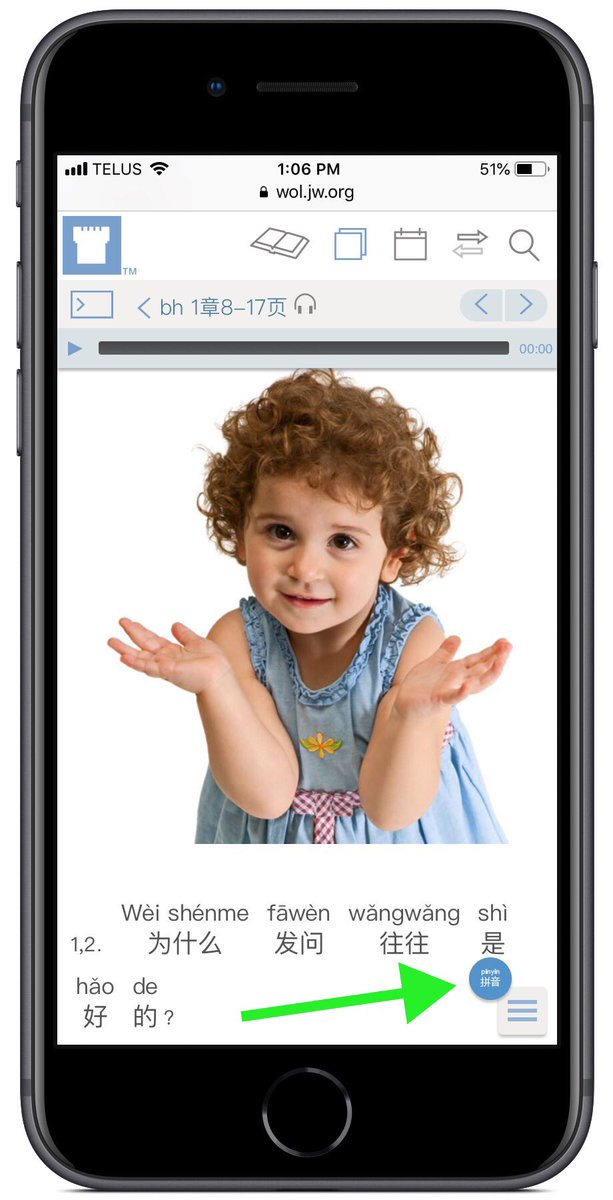
Official Pīnyīn web material is now available for certain publications on the Watchtower Online Library (WOL) when the language is set to Chinese Mandarin (Simplified) - 中文简体(普通话). This new web material renders Simplified Chinese characters with Pīnyīn ruby text, kind of like the official Pīnyīn PDF files do. However, unlike the official Pīnyīn PDF files, which are digital versions of paper publications with fixed page sizes and line renderings, this official Pīnyīn web material inherits the ability of web material to adapt to displays of different shapes and sizes, making it much more mobile-friendly than PDFs, especially on smaller mobile devices.


While some unofficial apps and services have been around for a while that can produce computer-generated mobile-friendly Pīnyīn material (perhaps also with English meanings) for any Chinese publication, a big disadvantage of the material that they produce is that it has not been human-proofread. So, while such material can be quickly produced in great quantities, it contains significant quantities of errors, because computers do not have the wisdom and love required to adapt appropriately and lovingly to whatever life and human language may bring—human language, a remarkable gift from Jehovah, can potentially express all human thought, much of which still eludes modern computers. The official Pīnyīn web material that is now available can be relied upon to be of higher quality than any computer-generated material, since it has been human-proofread. (Of course, unofficial computer-generated material is generally better than nothing when it comes to publications for which official Pīnyīn material is not yet available.)


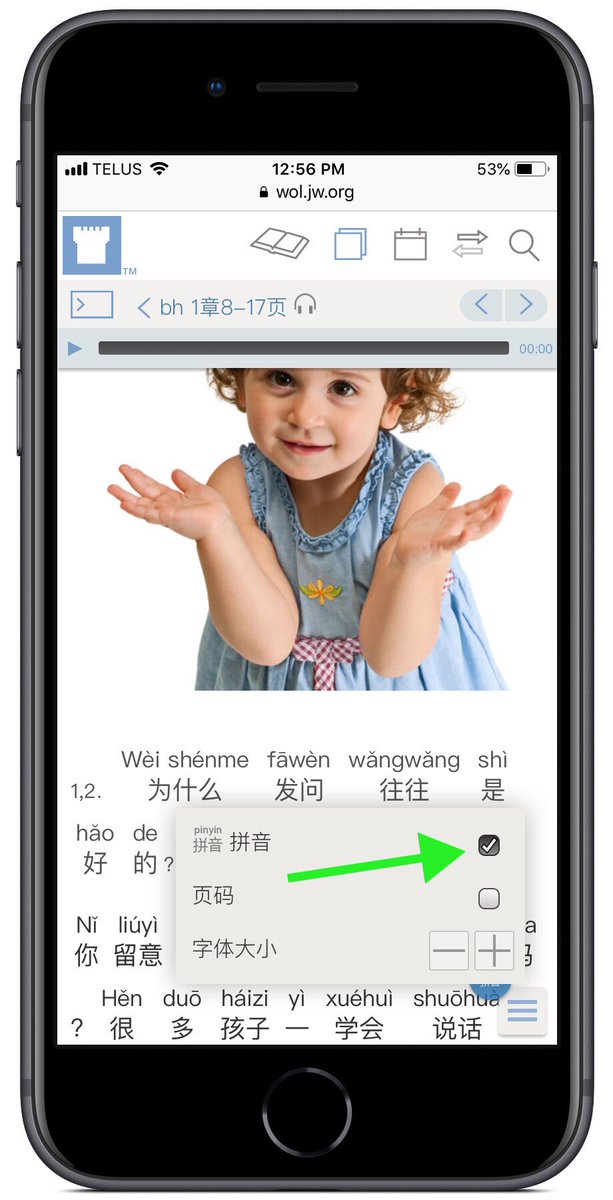
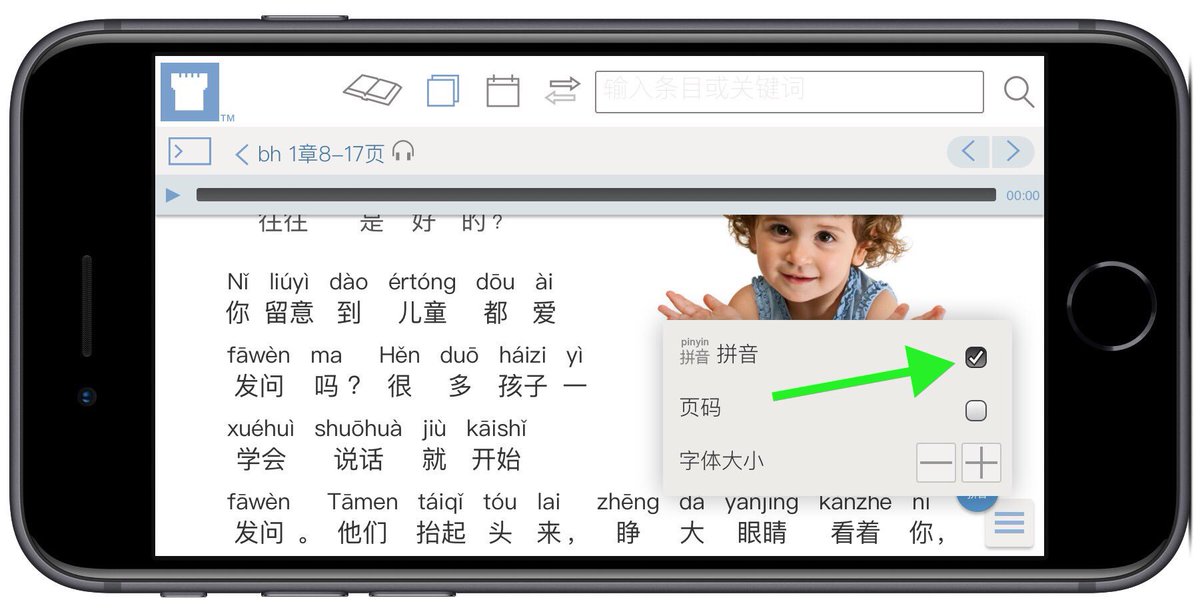
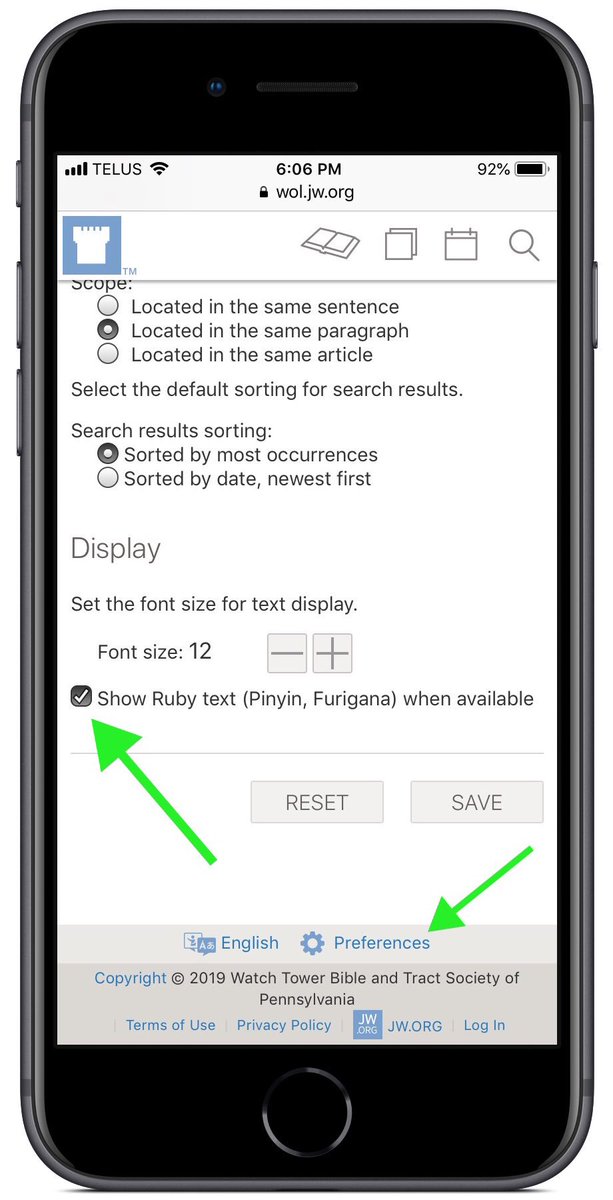
On the Watchtower Online Library (WOL), when the language is set to Chinese Mandarin (Simplified) - 中文简体(普通话) and when Pīnyīn ruby text is available for the loaded web page, an option must be selected from the menu displayed using the “hamburger menu” button on the bottom right for the Pīnyīn text to be displayed. (This setting is “remembered” like the other settings on this menu are. When Pīnyīn ruby text is not available for the loaded web page, the option is greyed out.)


This option can also be set using the ⚙ Preferences link near the bottom of WOL pages.


Many thanks to our God Jehovah and to our Leader Jesus, and to all the brothers and sisters who worked hard to make this official Pīnyīn web material available! Undoubtedly, it is just the first such mobile-friendly official Pīnyīn material and more is to follow, which will make it faster and easier for the many mobile device-using Mandarin field publishers around the world to be helped to more effectively speak in Mandarin “about the magnificent things of God”!—Acts 2:7–11.


The affected tiandi.info short links will gradually be updated as time allows.


Monday, December 31, 2018

“Sing Out Joyfully” Bk. Partially Proofread Pīnyīn Web Material or More Available for Songs for Dec. 31–Feb. 10 Mandarin Meetings

(NOTE: While the organization expresses valid general concerns here about posting copies of official publications to the Internet, there are good legal and spiritual reasons for concluding that those concerns do not apply to this particular material, due to its particular nature and purpose. See this disclaimer for more information.)


Thankfully, an official Pīnyīn PDF file for the current songbook “Sing Out Joyfully” to Jehovah (sjj) is now available for download from jw.org. (The short link for the new songbook, tiandi.info/sjj, has been updated accordingly.) Note, however, that the currently available official Pīnyīn PDF file only contains lyrics—it does not contain musical notation.


While we greatly appreciate the official Pīnyīn songbook PDF file that is available, the PDF format itself was conceived of in a world dominated by paper. Unfortunately, that means that PDF files are often not optimal for reading on the mobile devices that are now so prevalent among Mandarin field publishers.


Also, having to share limited display real estate with Chinese characters (and, in the past, musical notation) can in certain situations force the Pīnyīn text to be rendered in small type that can be difficult to read, especially for older people.


Another difficulty that is encountered, especially when one needs to quickly find the song that is about to be sung at a meeting, is that the official meeting schedules only list the numbers of the songs to be used, and the brothers announcing what song is about to be sung often only mention the song number, but in the current official Pīnyīn songbook PDF file, there is no listing of song links in song number order.


Partially proofread Pīnyīn web material (more correct than computer-generated Pīnyīn like that displayed by apps like Equipd, and more mobile-friendly than PDFs) or more for all the songs scheduled to be used during the Dec. 31–Feb. 10 Mandarin Our Christian Life and Ministry and “Watchtower” Study meetings has been posted to this resource that seeks to help with these challenges:


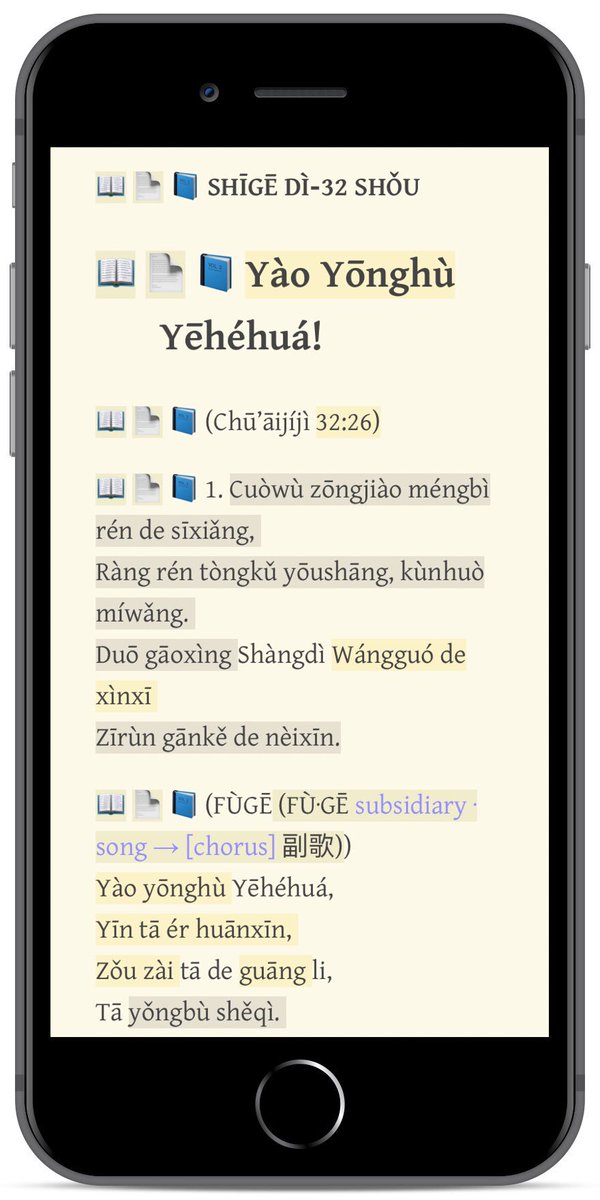
Screenshots of the above resource being used offline on an iPhone 📱, using the app GoodReader. (Other similar apps can also be used, e.g. Documents.)


Scheduling notes:

  • Mandarin Our Christian Life and Ministry and “Watchtower” Study meetings: Production of at least partially proofread Pīnyīn material (more correct than computer-generated Pīnyīn like that displayed by apps like Equipd, and more mobile-friendly than PDFs) with a few basic Pīnyīn Plus “flashcards” is expected to keep up with all the songs scheduled.
  • Mandarin 2018 Memorial meetings: Proofread Pīnyīn lyrics and musical notation are available for the songs scheduled.
  • Mandarin 2018 regional conventions: Proofread Pīnyīn lyrics and musical notation are available for all the songs scheduled.
  • Mandarin 2018–2019 circuit assemblies: Proofread Pīnyīn lyrics are available for all the songs scheduled. Musical notation is available for all the songs scheduled for the circuit assemblies with the circuit overseer. Musical notation is available for most of the songs scheduled for the circuit assemblies with a branch representative, and more is on the way.

The Pīnyīn songbook material in the above unofficial resource has been designed to be mobile-first, so it works well on mobile devices of various shapes and sizes, including tablets and smartphones 📱. Some of the ways in which it does so are:

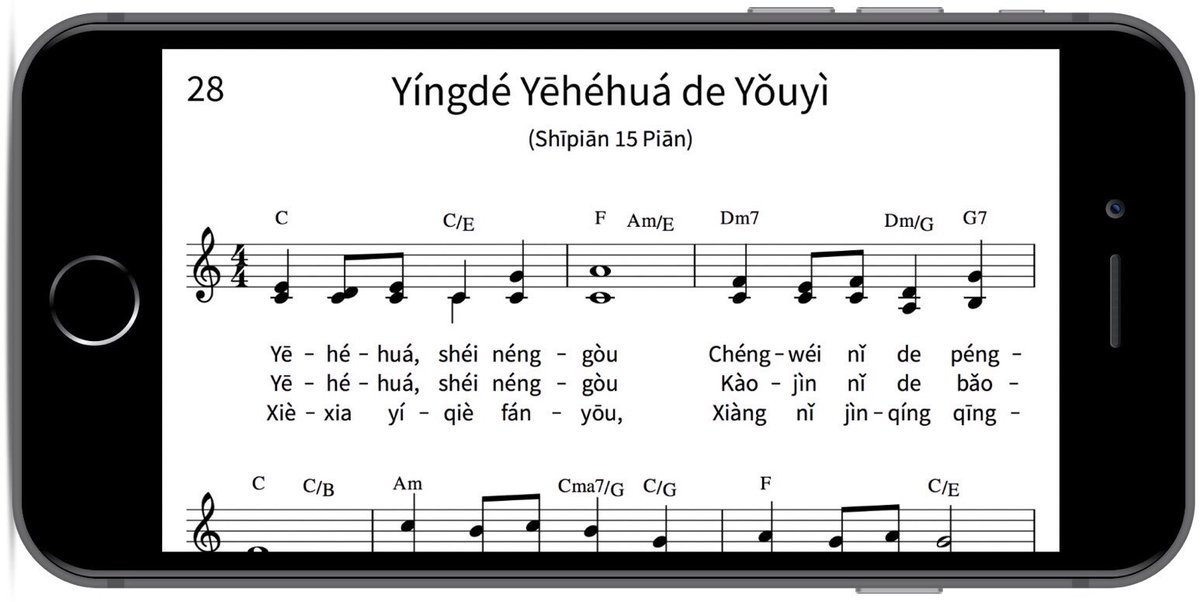
  • Song material with musical notation 🎼 automatically loads “prezoomed” to take full advantage of the width of your device’s display, so as to render its Pīnyīn lyrics in as large a size as possible.
  • In the song material with musical notation 🎼, the typeface (font) chosen for the Pīnyīn lyrics is one that is especially legible at smaller text sizes.
  • The lyrics-only material uses Pīnyīn Plus technology, so the text automatically reflows according to the width of the display. Also, the text can be set to different sizes by the user, and a Night Theme is available. As time allows, more Pīnyīn Plus “flashcards” will be added, with their English translations, Chinese characters, etc.

The introduction for the above resource explains why it’s good to use Pīnyīn as a writing system on its own.

In the material with musical notation in the above resource, the Pīnyīn lyrics do not have Pīnyīn Plus “flashcard” functionality because they need to stay aligned with the musical notation. As time allows, links will be added to Pīnyīn lyrics in the material with musical notation, each of which will cause a dialogue box to appear that shows the English translations, Chinese characters, etc. that a corresponding Pīnyīn Plus “flashcard” would show.


While the original intention re the above resource was to prioritize production of material with musical notation and leave off production of Pīnyīn Plus lyrics-only material indefinitely, further analysis has led to the realization that since proofread Pīnyīn lyrics must be produced in some form for the musical notation material anyway, and since Pīnyīn Plus technology is a time-effective way to record proofread Pīnyīn text, it would be efficient to first produce proofread Pīnyīn lyrics in Pīnyīn Plus format for a particular song, and then to use those proofread Pīnyīn lyrics to speed up the production of musical notation material for that song. So, that will be the production workflow going forward for the above resource.


Previously, musical notation in the above resource was taken from screenshots of an official PDF file. Note (and make it a musical note ♪, at that 😄), though, that the musical notation for song 77 marked the debut in the above resource of musical notation 🎼 produced “from scratch” to be mobile-first in design. This should provide for better and more consistent user experiences going forward, especially on smaller mobile devices like smartphones 📱.


Sunday, December 23, 2018

“Sing Out Joyfully” Bk. Partially Proofread Pīnyīn Web Material or More Available for Songs for Dec. 24–30 Mandarin Meetings

(NOTE: While the organization expresses valid general concerns here about posting copies of official publications to the Internet, there are good legal and spiritual reasons for concluding that those concerns do not apply to this particular material, due to its particular nature and purpose. See this disclaimer for more information.)


Thankfully, an official Pīnyīn PDF file for the current songbook “Sing Out Joyfully” to Jehovah (sjj) is now available for download from jw.org. (The short link for the new songbook, tiandi.info/sjj, has been updated accordingly.) Note, however, that the currently available official Pīnyīn PDF file only contains lyrics—it does not contain musical notation.


While we greatly appreciate the official Pīnyīn songbook PDF file that is available, the PDF format itself was conceived of in a world dominated by paper. Unfortunately, that means that PDF files are often not optimal for reading on the mobile devices that are now so prevalent among Mandarin field publishers.


Also, having to share limited display real estate with Chinese characters (and, in the past, musical notation) can in certain situations force the Pīnyīn text to be rendered in small type that can be difficult to read, especially for older people.


Another difficulty that is encountered, especially when one needs to quickly find the song that is about to be sung at a meeting, is that the official meeting schedules only list the numbers of the songs to be used, and the brothers announcing what song is about to be sung often only mention the song number, but in the current official Pīnyīn songbook PDF file, there is no listing of song links in song number order.


Partially proofread Pīnyīn web material (more correct than computer-generated Pīnyīn like that displayed by apps like Equipd, and more mobile-friendly than PDFs) or more for all the songs scheduled to be used during the Dec. 24–30 Mandarin Our Christian Life and Ministry and “Watchtower” Study meetings has been posted to this resource that seeks to help with these challenges:


Screenshots of the above resource being used offline on an iPhone 📱, using the app GoodReader. (Other similar apps can also be used, e.g. Documents.)


Scheduling notes:

  • Mandarin Our Christian Life and Ministry and “Watchtower” Study meetings: Production of at least partially proofread Pīnyīn material (more correct than computer-generated Pīnyīn like that displayed by apps like Equipd, and more mobile-friendly than PDFs) with a few basic Pīnyīn Plus “flashcards” is expected to keep up with all the songs scheduled.
  • Mandarin 2018 Memorial meetings: Proofread Pīnyīn lyrics and musical notation are available for the songs scheduled.
  • Mandarin 2018 regional conventions: Proofread Pīnyīn lyrics and musical notation are available for all the songs scheduled.
  • Mandarin 2018–2019 circuit assemblies: Proofread Pīnyīn lyrics are available for all the songs scheduled. Musical notation is available for all the songs scheduled for the circuit assemblies with the circuit overseer. Musical notation is available for most of the songs scheduled for the circuit assemblies with a branch representative, and more is on the way.

The Pīnyīn songbook material in the above unofficial resource has been designed to be mobile-first, so it works well on mobile devices of various shapes and sizes, including tablets and smartphones 📱. Some of the ways in which it does so are:

  • Song material with musical notation 🎼 automatically loads “prezoomed” to take full advantage of the width of your device’s display, so as to render its Pīnyīn lyrics in as large a size as possible.
  • In the song material with musical notation 🎼, the typeface (font) chosen for the Pīnyīn lyrics is one that is especially legible at smaller text sizes.
  • The lyrics-only material uses Pīnyīn Plus technology, so the text automatically reflows according to the width of the display. Also, the text can be set to different sizes by the user, and a Night Theme is available. As time allows, more Pīnyīn Plus “flashcards” will be added, with their English translations, Chinese characters, etc.

The introduction for the above resource explains why it’s good to use Pīnyīn as a writing system on its own.

In the material with musical notation in the above resource, the Pīnyīn lyrics do not have Pīnyīn Plus “flashcard” functionality because they need to stay aligned with the musical notation. As time allows, links will be added to Pīnyīn lyrics in the material with musical notation, each of which will cause a dialogue box to appear that shows the English translations, Chinese characters, etc. that a corresponding Pīnyīn Plus “flashcard” would show.


While the original intention re the above resource was to prioritize production of material with musical notation and leave off production of Pīnyīn Plus lyrics-only material indefinitely, further analysis has led to the realization that since proofread Pīnyīn lyrics must be produced in some form for the musical notation material anyway, and since Pīnyīn Plus technology is a time-effective way to record proofread Pīnyīn text, it would be efficient to first produce proofread Pīnyīn lyrics in Pīnyīn Plus format for a particular song, and then to use those proofread Pīnyīn lyrics to speed up the production of musical notation material for that song. So, that will be the production workflow going forward for the above resource.


Previously, musical notation in the above resource was taken from screenshots of an official PDF file. Note (and make it a musical note ♪, at that 😄), though, that the musical notation for song 77 marked the debut in the above resource of musical notation 🎼 produced “from scratch” to be mobile-first in design. This should provide for better and more consistent user experiences going forward, especially on smaller mobile devices like smartphones 📱.


Tuesday, December 18, 2018

New Short Link: “My Follower” Book Links (tiandi.info/cf)

A new short link has been created for official and unofficial Chinese field language-learning resources for the “My Follower” book, which is scheduled to be studied next at Mandarin and Cantonese Congregation Bible Study meetings:

Monday, December 17, 2018

“God’s Love” Bk. Partially Proofread Pīnyīn Web Material or More Available for Entire Book

(NOTE: While the organization expresses valid general concerns here about posting copies of official publications to the Internet, there are good legal and spiritual reasons for concluding that those concerns do not apply to this particular material, due to its particular nature and purpose. See this disclaimer for more information.)


Partially proofread Pīnyīn web material (more correct than computer-generated Pīnyīn like that displayed by apps like Equipd, and more mobile-friendly than PDFs) or more is now available for the entire “God’s Love” book:

Fully proofread Pīnyīn Plus material:

  • Up to the end of Chap. 1, Par. 6

Partially proofread Pīnyīn and Pīnyīn Plus material:

  • Chap. 1, Par. 7 to the end
  • Material with a grey background has been partially proofread. Pīnyīn material with a golden-hued background has been proofread, but not all of its “flashcards” have been added and proofread.

Pīnyīn Plus “flashcards” added for all expressions:

  • Up to the end of Chap. 1, Par. 9

Pīnyīn Plus “flashcards” added for the more advanced expressions:

  • Up to the end of Chap. 1, Par. 15

More “flashcard” material will be added and proofread as time allows. I plan to focus on the more difficult expressions first, and then to work my way through the rest of the expressions. The web material is updated first, and eventually changes are grouped together and integrated into the upcoming EPUB material. (FYI, EPUBs are largely made of web material.)


Pīnyīn Plus material pages now default to the 📄 Reveal Advanced mode, which by default reveals the “flashcards” of some of the more advanced expressions. This makes it easier for new users to get a taste of the available information. If they wish, they can then select the 📘 Reveal None mode, which by default displays only Pīnyīn that’s been optimized for readability, so that it’s easy to use to follow along when the text is read aloud or discussed in Mandarin.


For more information about the thinking behind the design of Pīnyīn Plus material, check out:

To expand on the points listed re the above resource, note that:

  • The material in the above resource has been carefully translated, rendered, and proofread. Material with a grey background has been partially proofread. Pīnyīn material with a golden-hued background has been proofread, but not all of its “flashcards” have been added and proofread.
  • The material in the above resource is based on the latest 2017-02 printing of the Mandarin “God’s Love” book. If you notice that some changes need to be made to the material in the above resource to bring it in line with revisions to the “God’s Love” book, please email me to let me know.
  • Included in the above resource is the linked full text of all the cited scriptures that the English version specifically indicates should be read. The linked full text of the rest of the cited scriptures is in the process of being added as well.
  • The above resource is mobile-friendly—it is quite legible and usable on everything from desktop/laptop PCs and Macs to iPads and other tablets to iPhones and other smartphones.
  • In the above resource, links are used extensively to make it quick and easy to get around in the material, drastically reducing the amount of manual scrolling needed.
  • The above resource contains picture links which point to the official pictures on jw.org. Thumbnails help identify the pictures linked to.
  • The above resource contains links to the official Mandarin MP3 audio files on jw.org.
  • On the web pages, there is a drop-down list at the top left for setting the desired text size.
  • On the web pages, the ☀️/🌙 button at the top right can be used to turn Night Theme on or off.
  • For your convenience, a short link (“God’s Love” Book Links (tiandi.info/lv)) is available for the above resource.

Also, the introduction explains why it’s good to use Pīnyīn as a writing system on its own.

Monday, December 10, 2018

“Sing Out Joyfully” Bk. Partially Proofread Pīnyīn Web Material or More Available for Songs for Dec.10–23 Mandarin Meetings

(NOTE: While the organization expresses valid general concerns here about posting copies of official publications to the Internet, there are good legal and spiritual reasons for concluding that those concerns do not apply to this particular material, due to its particular nature and purpose. See this disclaimer for more information.)


Thankfully, an official Pīnyīn PDF file for the current songbook “Sing Out Joyfully” to Jehovah (sjj) is now available for download from jw.org. (The short link for the new songbook, tiandi.info/sjj, has been updated accordingly.) Note, however, that the currently available official Pīnyīn PDF file only contains lyrics—it does not contain musical notation.


While we greatly appreciate the official Pīnyīn songbook PDF file that is available, the PDF format itself was conceived of in a world dominated by paper. Unfortunately, that means that PDF files are often not optimal for reading on the mobile devices that are now so prevalent among Mandarin field publishers.


Also, having to share limited display real estate with Chinese characters (and, in the past, musical notation) can in certain situations force the Pīnyīn text to be rendered in small type that can be difficult to read, especially for older people.


Another difficulty that is encountered, especially when one needs to quickly find the song that is about to be sung at a meeting, is that the official meeting schedules only list the numbers of the songs to be used, and the brothers announcing what song is about to be sung often only mention the song number, but in the current official Pīnyīn songbook PDF file, there is no listing of song links in song number order.


Partially proofread Pīnyīn web material (more correct than computer-generated Pīnyīn like that displayed by apps like Equipd, and more mobile-friendly than PDFs) or more for all the songs scheduled to be used during the Dec. 10–23 Mandarin Our Christian Life and Ministry and “Watchtower” Study meetings has been posted to this resource that seeks to help with these challenges:


Screenshots of the above resource being used offline on an iPhone 📱, using the app GoodReader. (Other similar apps can also be used, e.g. Documents.)


Scheduling notes:

  • Mandarin Our Christian Life and Ministry and “Watchtower” Study meetings: Production of at least partially proofread Pīnyīn material (more correct than computer-generated Pīnyīn like that displayed by apps like Equipd, and more mobile-friendly than PDFs) with a few basic Pīnyīn Plus “flashcards” is expected to keep up with all the songs scheduled.
  • Mandarin 2018 Memorial meetings: Proofread Pīnyīn lyrics and musical notation are available for the songs scheduled.
  • Mandarin 2018 regional conventions: Proofread Pīnyīn lyrics and musical notation are available for all the songs scheduled.
  • Mandarin 2018–2019 circuit assemblies: Proofread Pīnyīn lyrics are available for all the songs scheduled. Musical notation is available for all the songs scheduled for the circuit assemblies with the circuit overseer. Musical notation is available for most of the songs scheduled for the circuit assemblies with a branch representative, and more is on the way.

The Pīnyīn songbook material in the above unofficial resource has been designed to be mobile-first, so it works well on mobile devices of various shapes and sizes, including tablets and smartphones 📱. Some of the ways in which it does so are:

  • Song material with musical notation 🎼 automatically loads “prezoomed” to take full advantage of the width of your device’s display, so as to render its Pīnyīn lyrics in as large a size as possible.
  • In the song material with musical notation 🎼, the typeface (font) chosen for the Pīnyīn lyrics is one that is especially legible at smaller text sizes.
  • The lyrics-only material uses Pīnyīn Plus technology, so the text automatically reflows according to the width of the display. Also, the text can be set to different sizes by the user, and a Night Theme is available. As time allows, more Pīnyīn Plus “flashcards” will be added, with their English translations, Chinese characters, etc.

The introduction for the above resource explains why it’s good to use Pīnyīn as a writing system on its own.

In the material with musical notation in the above resource, the Pīnyīn lyrics do not have Pīnyīn Plus “flashcard” functionality because they need to stay aligned with the musical notation. As time allows, links will be added to Pīnyīn lyrics in the material with musical notation, each of which will cause a dialogue box to appear that shows the English translations, Chinese characters, etc. that a corresponding Pīnyīn Plus “flashcard” would show.


While the original intention re the above resource was to prioritize production of material with musical notation and leave off production of Pīnyīn Plus lyrics-only material indefinitely, further analysis has led to the realization that since proofread Pīnyīn lyrics must be produced in some form for the musical notation material anyway, and since Pīnyīn Plus technology is a time-effective way to record proofread Pīnyīn text, it would be efficient to first produce proofread Pīnyīn lyrics in Pīnyīn Plus format for a particular song, and then to use those proofread Pīnyīn lyrics to speed up the production of musical notation material for that song. So, that will be the production workflow going forward for the above resource.


Previously, musical notation in the above resource was taken from screenshots of an official PDF file. Note (and make it a musical note ♪, at that 😄), though, that the musical notation for song 77 marked the debut in the above resource of musical notation 🎼 produced “from scratch” to be mobile-first in design. This should provide for better and more consistent user experiences going forward, especially on smaller mobile devices like smartphones 📱.