MEotW: fǎn’ér
The Mandarin Expression of the Week is:
When might it be good to be “contrarian” in the Mandarin field?
Comments are enabled on this blog, so if you are so inclined, comment away!
A news feed for this blog is available here.
The Mandarin Expression of the Week is:
When might it be good to be “contrarian” in the Mandarin field?
Comments are enabled on this blog, so if you are so inclined, comment away!
A news feed for this blog is available here.
The Mandarin Expression of the Week is:
How do we respond to the voodooesque power of the Great Wall of characters?
Comments are enabled on this blog, so if you are so inclined, comment away!
A news feed for this blog is available here.
The Mandarin Expression of the Week is:
What can help us to reintroduce Mandarin-speaking Chinese people to the Supreme Sovereign of the universe?
Comments are enabled on this blog, so if you are so inclined, comment away!
A news feed for this blog is available here.
The Mandarin Expression of the Week is:
How can we introduce to Mandarin-speaking people the subject of what the Bible says about nuclear war?
Comments are enabled on this blog, so if you are so inclined, comment away!
A news feed for this blog is available here.
The Mandarin Expression of the Week is:
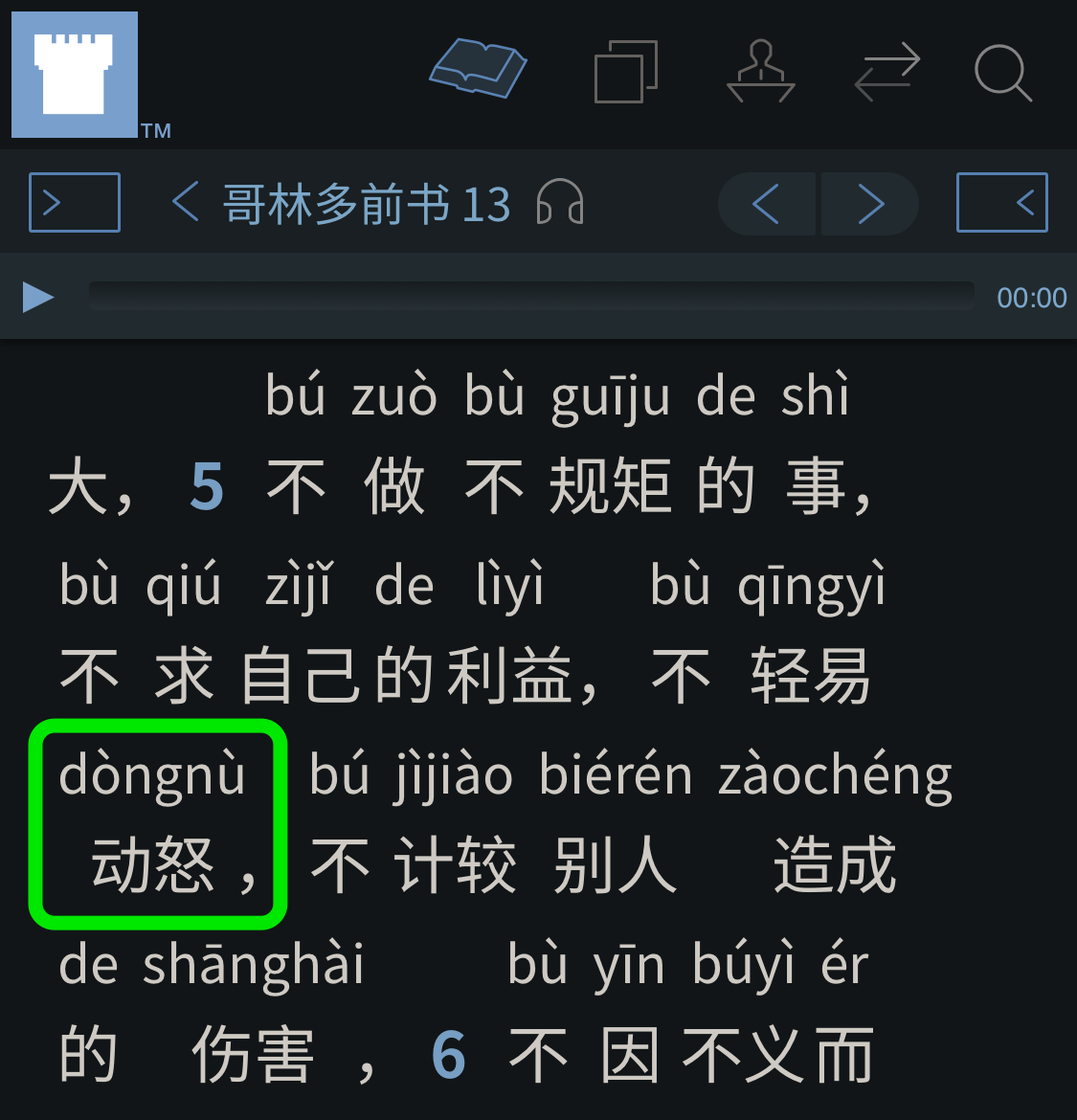
How can we express in Mandarin our determination to stick to the truth?
This week’s MEotW in the unofficial Pīnyīn Plus resource “Sing Out Joyfully” Bk. (Pīnyīn+Music, Pīnyīn Plus, Web)
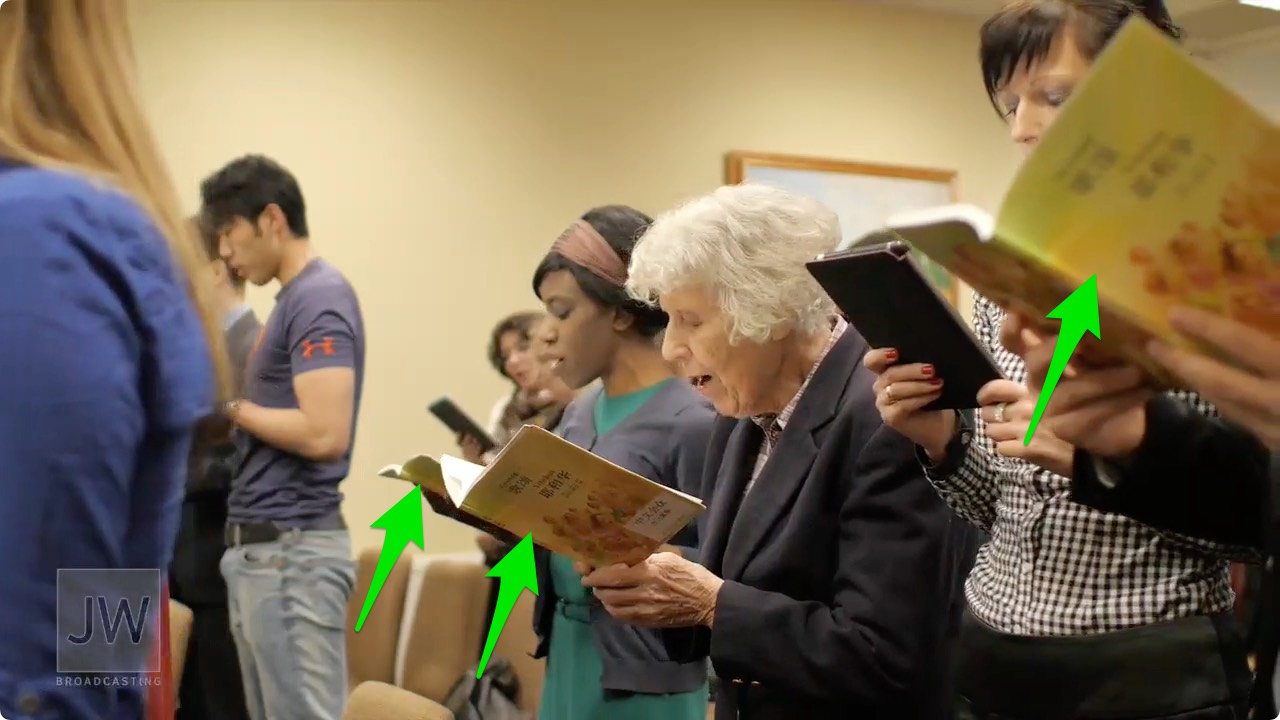
A screenshot from an official video, of Sis. Margarita Königer and others using official Pīnyīn Sing to Jehovah songbooks with musical notation
Comments are enabled on this blog, so if you are so inclined, comment away!
A news feed for this blog is available here.
The Mandarin Expression of the Week is:
Are homophones really a showstopper when it comes to using Pīnyīn to write Mandarin? How are homographs a similar problem for characters?
Many claim that _Pīnyīn_ shouldn’t be used as a writing system because characters are required to avoid confusion from all the homophones (different words that sound the same) in Mandarin.
— Troubadour WW (@troubadourww) April 8, 2025
If that’s true, then people shouldn’t SPEAK Mandarin either! But many do, and it’s fine. pic.twitter.com/1MK0ERuFjc
Comments are enabled on this blog, so if you are so inclined, comment away!
A news feed for this blog is available here.
The Mandarin Expression of the Week is:
Is anger an appropriate reaction to the suggestion to focus less on characters and more on Pīnyīn?
Comments are enabled on this blog, so if you are so inclined, comment away!
A news feed for this blog is available here.
The Mandarin Expression of the Week is:
What can we say to Mandarin-speaking people about how fine-tuned the universe is to support life?
Comments are enabled on this blog, so if you are so inclined, comment away!
A news feed for this blog is available here.
The Mandarin Expression of the Week is:
How can we talk to Mandarin-speaking people, many of whom believe in evolution, about the “security guards” built into our cells?
Comments are enabled on this blog, so if you are so inclined, comment away!
A news feed for this blog is available here.
[NOTE: For spiritual food (which is for you yourself to learn spiritual things from, and which ideally should be in your own mother tongue), please go to jw.org.
The supplementary language-learning material mentioned in this post is for helping you to learn about how the Mandarin language is used in an official publication, so that you will be better able to help others in the Mandarin language field.]
Partially proofread Pīnyīn web material (more correct than computer-generated Pīnyīn like that displayed by apps like Equipd, and more mobile-friendly than PDFs) or better is available for up to Lesson 65 of the Learn From the Bible book in the following resource:
In the above resource, the following web material is now available for the Mandarin Learn From the Bible book:
Note that like most of the other Pīnyīn Plus web material resources, the above resource can be used offline. Also, an icon can be added to the home screen with supporting browsers.
While incomplete, this material can help Mandarin field language learners—especially, but not only, those who can read English—to get past the Great Wall of characters and supercharge their efforts to prepare for and participate in Mandarin discussions using the Learn From the Bible book, such as those now scheduled for the Congregation Bible Study sections of our Life and Ministry meetings.
[NOTE: While the organization expresses valid general concerns here about posting copies of official publications to the Internet, there are good legal and spiritual reasons for concluding that those concerns do not apply to this particular material, since such material should NOT be considered to be infringing on copyright, and since such material is specifically designed to be, NOT SPIRITUAL FOOD, but rather, material FOR LANGUAGE LEARNING. See this disclaimer for more information.]
The Mandarin Expression of the Week is:
While they are simpler than traditional Chinese characters, why are the official simplified characters at best a compromise?
“爱” is the Simplified Chinese character for “love”. It’s simpler, but omits the “heart” radical (“心”), and has been “friend” (“友”)-zoned. 💔
— Troubadour WW (@troubadourww) February 20, 2017
“Ài” is how Pīnyīn represents “love”. It doesn’t play the games the characters play—it helps you actually say “I love you” (“Wǒ ài nǐ”). ❤️
— Troubadour WW (@troubadourww) February 20, 2017
Comments are enabled on this blog, so if you are so inclined, comment away!
A news feed for this blog is available here.
The Mandarin Expression of the Week is:
As beloved as they are by many, why have there been serious, concerted efforts to simplify and replace traditional Chinese characters?
“愛” is the Traditional Chinese character for “love”. It appropriately has the “heart” radical (“心”) in it, but it’s quite…complicated. 😓
— Troubadour WW (@troubadourww) February 20, 2017
Comments are enabled on this blog, so if you are so inclined, comment away!
A news feed for this blog is available here.
The Mandarin Expression of the Week is:
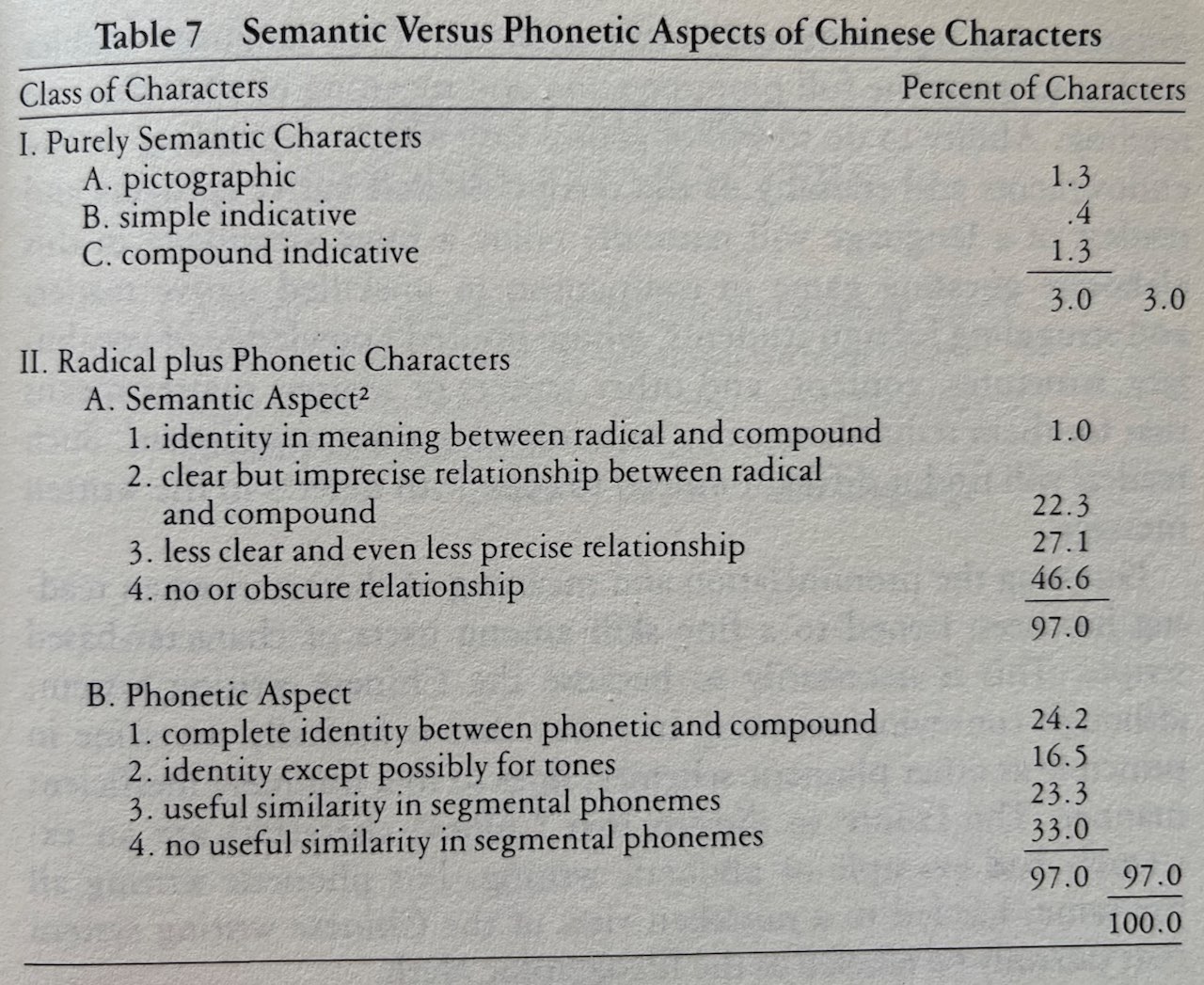
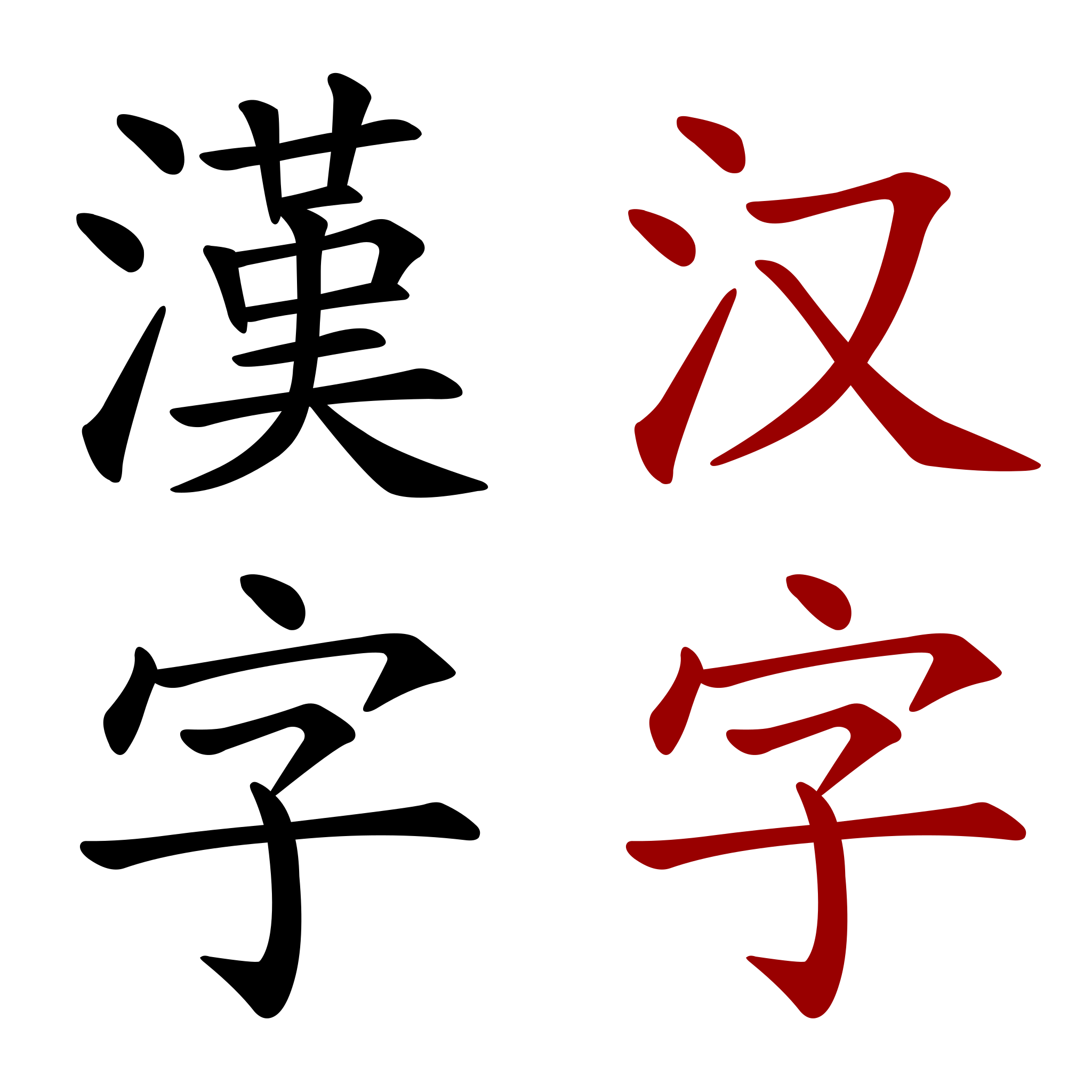
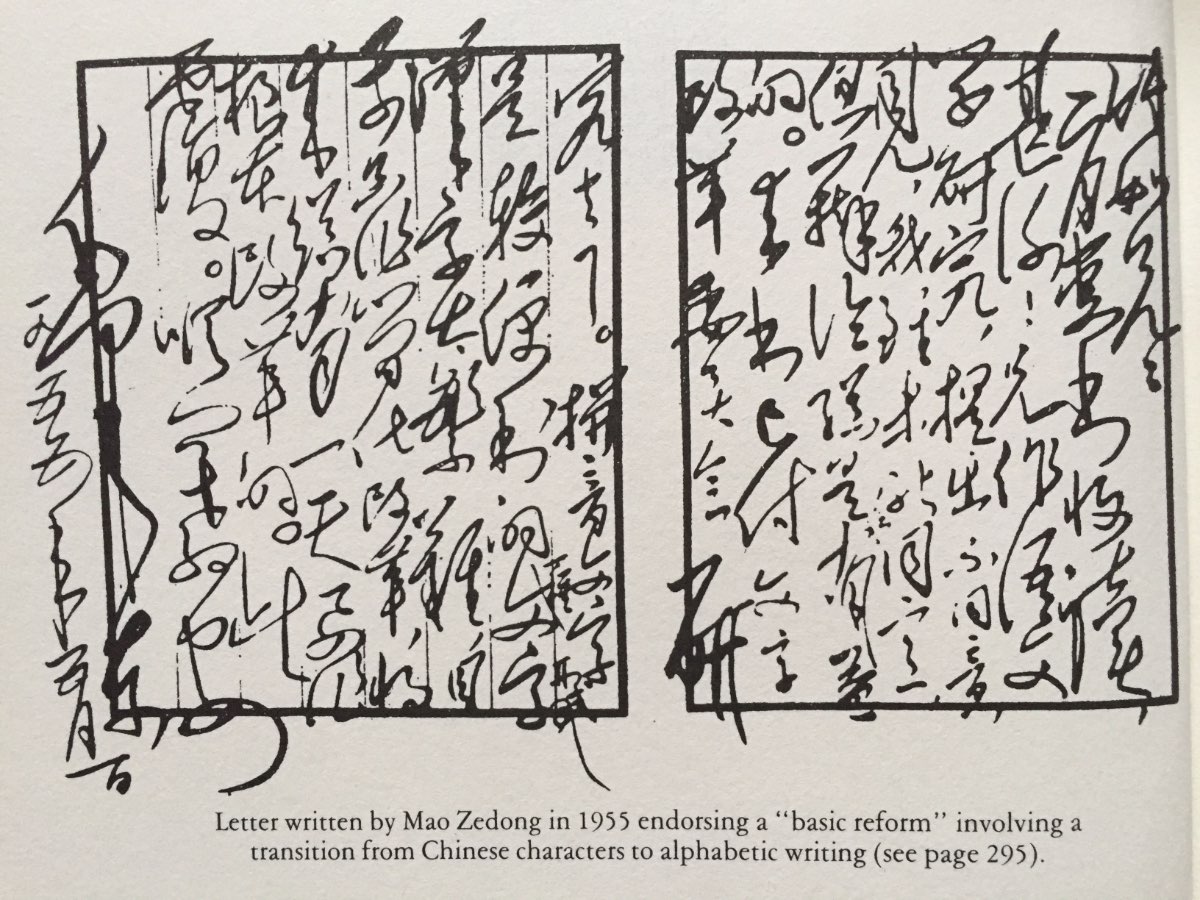
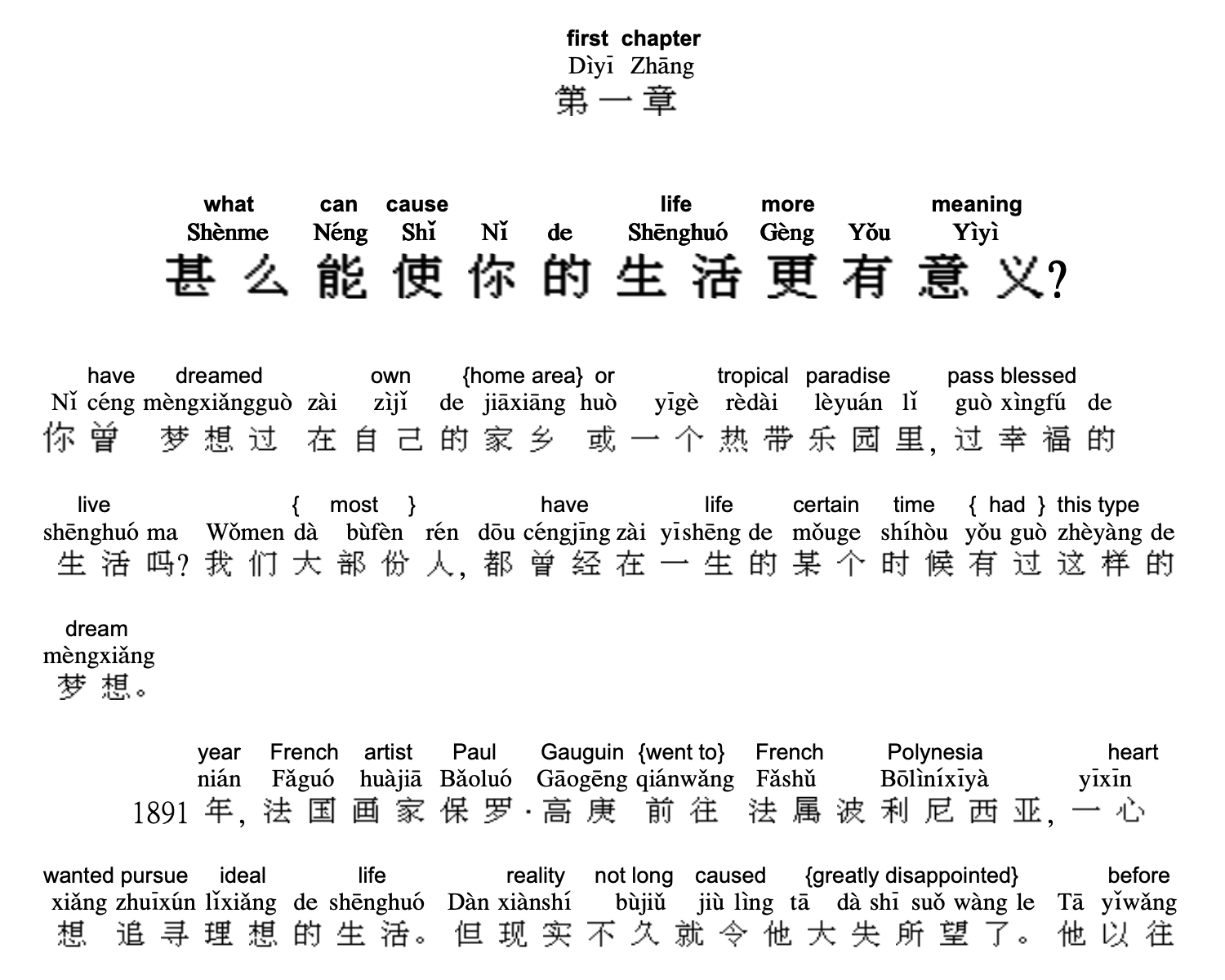
In the big picture, how should we Mandarin field language learners view Chinese characters?
(The above picture is from near the beginning of the book The Chinese Language: Fact and Fantasy, by John DeFrancis.)
Comments are enabled on this blog, so if you are so inclined, comment away!
A news feed for this blog is available here.
Updates and more _Pīnyīn_ Plus material added to _Learn From the Bible_ Bk. _Pīnyīn_ Plus web material for Lessons 18 & 19 (proofread, adjustable text size, integrated flashcards, context-appropriate human-translated English, CHS, CH, offline use, icon…) troubadourworks.com/tiandi/lfb/P...
— tiandi, Links News (@tiandilinksnews.bsky.social) September 12, 2025 at 6:48 PM
[image or embed]
The Mandarin Expression of the Week is:
Why should we learn how to discuss in Mandarin what lesson 13 of the Enjoy Life Forever! book says about World War II?
Comments are enabled on this blog, so if you are so inclined, comment away!
A news feed for this blog is available here.
The Mandarin Expression of the Week is:
What helps to show that Jehovah has been directing things in the worldwide Mandarin field?
A screenshot of early 3-line PDF material from 2001, based on the book Is There a Creator Who Cares About You?
Comments are enabled on this blog, so if you are so inclined, comment away!
A news feed for this blog is available here.
The Mandarin Expression of the Week is:
What can we say to Mandarin-speaking people about the so-called “coincidences” that allow life to exist on earth?
Comments are enabled on this blog, so if you are so inclined, comment away!
A news feed for this blog is available here.
The Mandarin Expression of the Week is:
In the Mandarin field, how can we decide what kind of Mandarin to learn and to speak?
Sometimes that Boston accent slips out when you least expect it pic.twitter.com/urXO2xrQ6E
— Ellen Fleming (@EllenFlem) January 12, 2023
Comments are enabled on this blog, so if you are so inclined, comment away!
A news feed for this blog is available here.
The Mandarin Expression of the Week is:
How can we help to ensure that Jehovah gets the honour and glory he deserves as we serve in the Mandarin field?
Comments are enabled on this blog, so if you are so inclined, comment away!
A news feed for this blog is available here.
The Mandarin Expression of the Week is:
In the Mandarin field, how can we imitate David as we face a cultural Goliath?
“To Jehovah, for whom ‘a thousand years is as one day’, Chinese civilization has only been around for a few days.…
— tiandi, Links News (@TiandiLinksNews) June 9, 2024
“…we should boast in Jehovah, not in needlessly and self-indulgently complex knowledge relating to a mere worldly human culture” https://t.co/emXNAng9W2#MEotW pic.twitter.com/xEjlDPAkud
Comments are enabled on this blog, so if you are so inclined, comment away!
A news feed for this blog is available here.
The Mandarin Expression of the Week is:
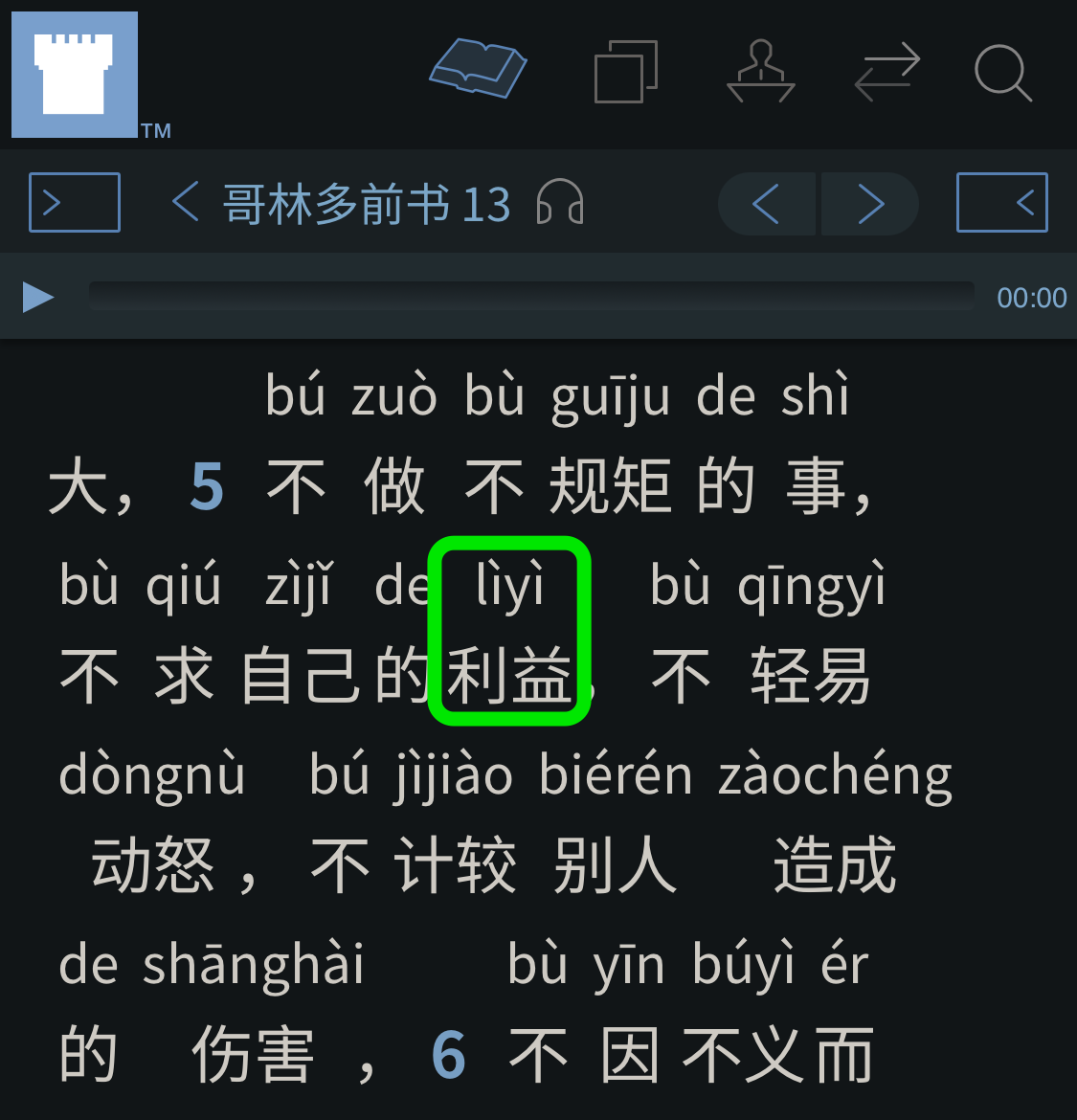
In the Mandarin field, how can we show love that “does not look for its own interests”?
Comments are enabled on this blog, so if you are so inclined, comment away!
A news feed for this blog is available here.
The Mandarin Expression of the Week is:
Why is it especially important to talk to people in the Mandarin field about the evidence showing that the Creator exists?
Comments are enabled on this blog, so if you are so inclined, comment away!
A news feed for this blog is available here.
The Mandarin Expression of the Week is:
In the Mandarin field, what can we say to those who believe that living things evolved from relatively less complex living things?
Comments are enabled on this blog, so if you are so inclined, comment away!
A news feed for this blog is available here.
The Mandarin Expression of the Week is:
What could we say to people in the Mandarin field who may be concerned about war in the Middle East?
Comments are enabled on this blog, so if you are so inclined, comment away!
A news feed for this blog is available here.
[NOTE: For spiritual food (which is for you yourself to learn spiritual things from, and which ideally should be in your own mother tongue), please go to jw.org.
The supplementary language-learning material mentioned in this post is for helping you to learn about how the Mandarin language is used in an official publication, so that you will be better able to help others in the Mandarin language field.]
Thankfully, an official Pīnyīn PDF file for the current songbook “Sing Out Joyfully” to Jehovah (sjj) is available for download from jw.org. (The short link for the current songbook, tiandi.info/sjj, has the link and additional information.) Note, however, that the currently available official Pīnyīn PDF file (2020 Nián 3 Yuè Printing) only contains lyrics—it does not contain musical notation 🎼. Also, it does not contain songs 152 to 161, which are available in the Mandarin 2025 Nián 3 Yuè Printing of the current songbook.
While we greatly appreciate the official Pīnyīn songbook PDF file that is available, the PDF format itself was conceived of in a world dominated by paper. Unfortunately, that means that PDF files are often not optimal for reading on the mobile devices that are now so prevalent among Mandarin field publishers.
Also, having to share limited display real estate with Chinese characters (and, in the past, musical notation 🎼) can in certain situations force the Pīnyīn text to be rendered in small type that can be difficult to read, especially for older people. (This relegation of Pīnyīn to being ruby text reflects the traditional/orthodox but erroneous and unjust view that Pīnyīn can only be a pronunciation aid, when it really qualifies as and works well as a full writing system.)
Another difficulty that is encountered, especially when one needs to quickly find the song that is about to be sung at a meeting, is that the official meeting schedules only list the numbers of the songs to be used, and the brothers announcing what song is about to be sung often only mention the song number, but in the current official Pīnyīn songbook PDF file, there is no listing of song links in song number order.
The official Pīnyīn “Sing Out Joyfully” to Jehovah (sjj) material that is now available in the JW Library app (iOS/iPadOS; Android; Windows) and on jw.org and the WOL does much to address the above challenges, but it still does not put musical notation 🎼 together with Pīnyīn, and it still gives prime display real estate to Chinese characters, at the expense of the Pīnyīn.
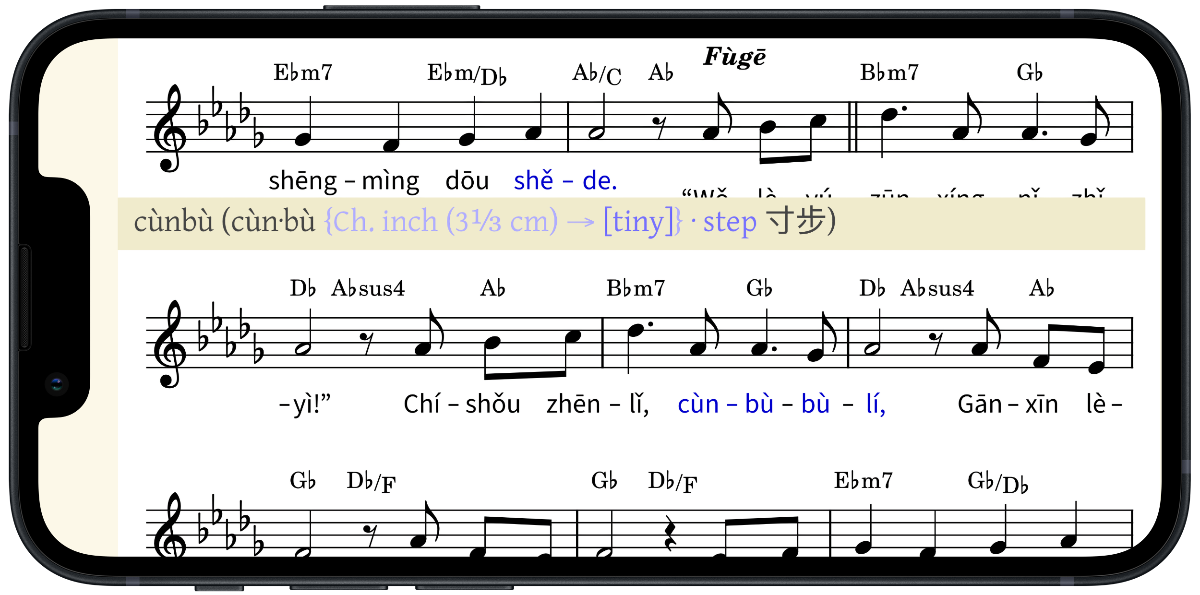
Unofficial language-learning materials for all the songs for Mandarin 2025–2026 circuit assemblies, in the forms of proofread musical notation 🎼 with Pīnyīn lyrics and proofread Pīnyīn web material (more correct than computer-generated Pīnyīn like that displayed by apps like Equipd, and more mobile-friendly than PDFs) or better, have been posted to this resource that seeks to help with the above-mentioned challenges:

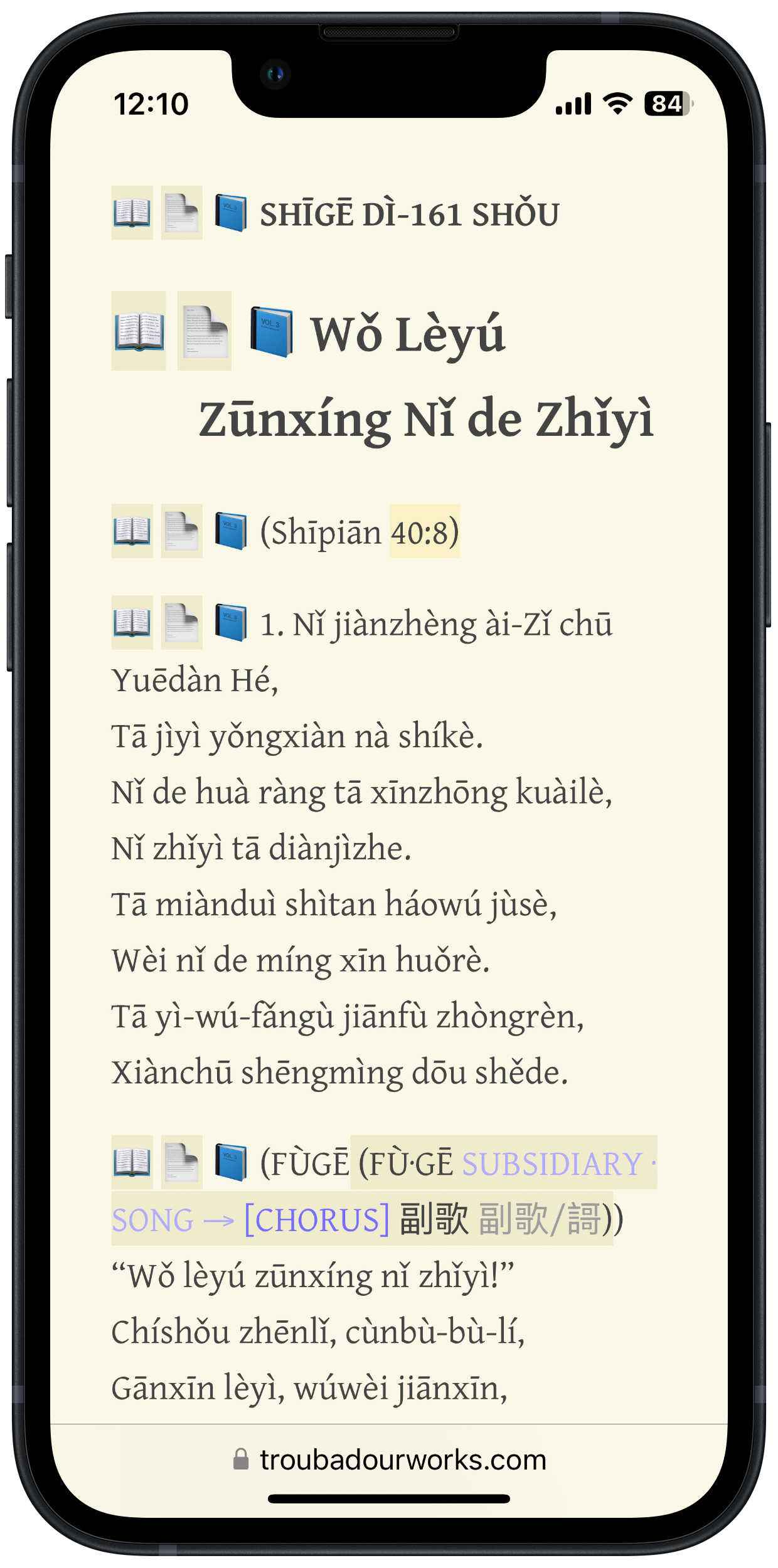
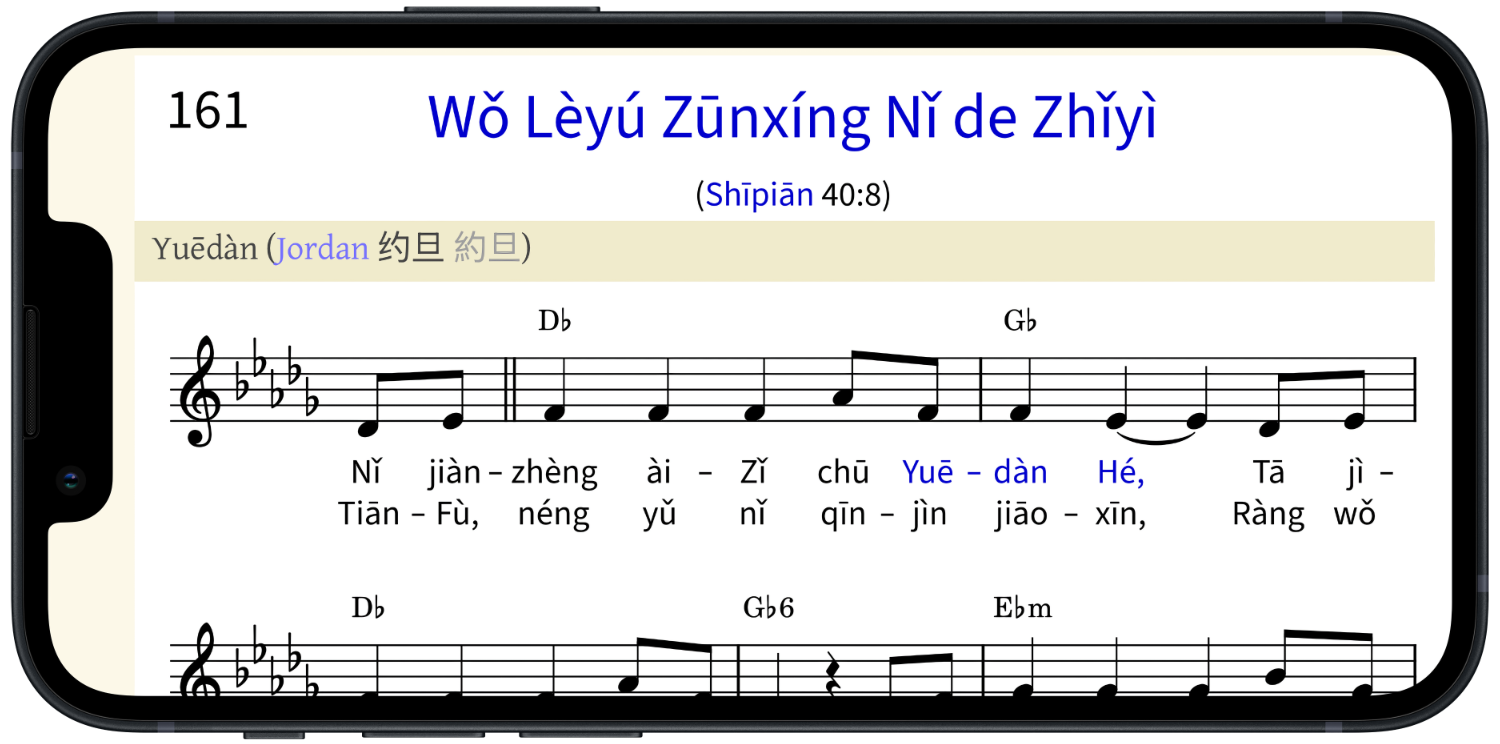
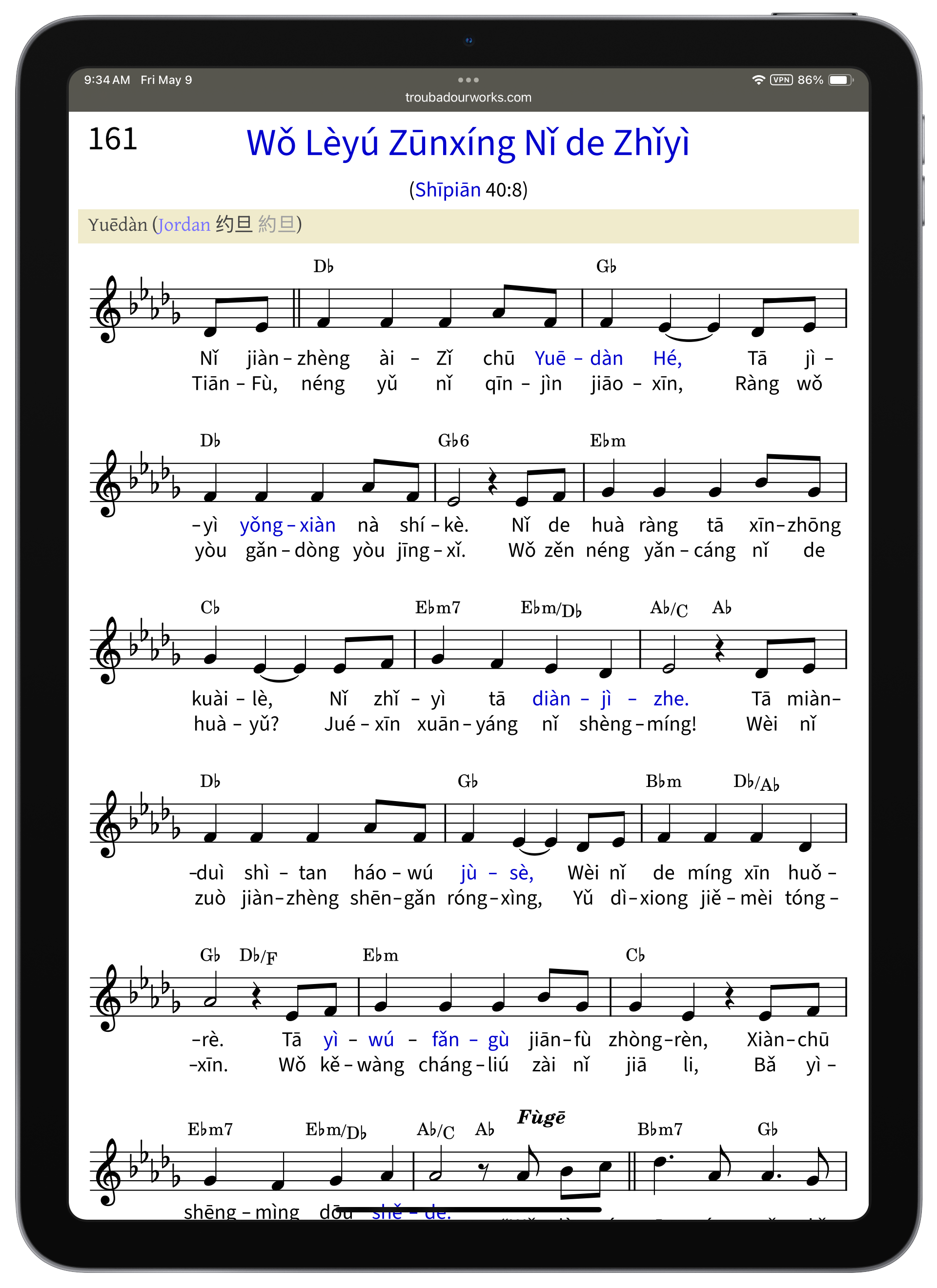
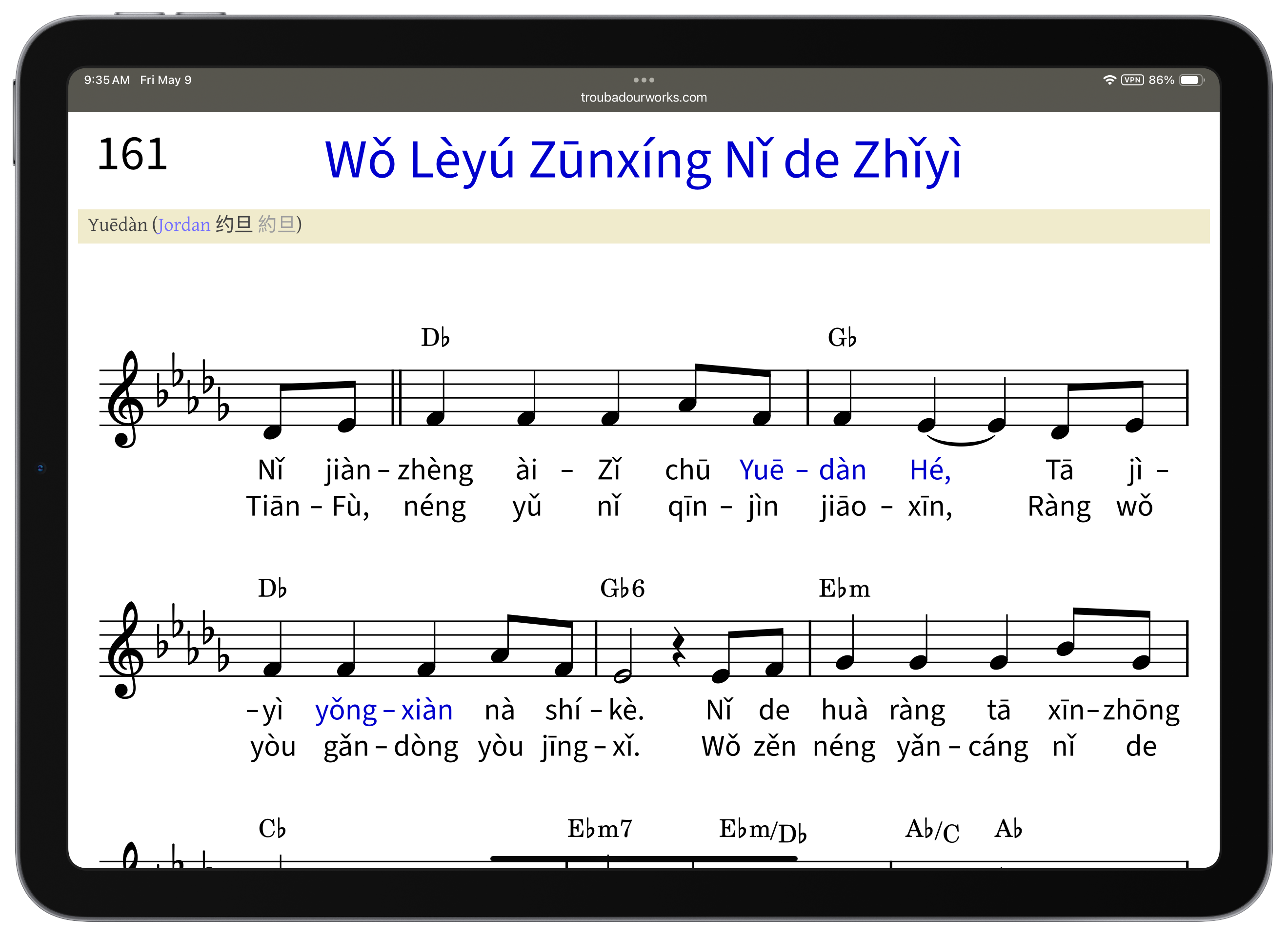
Screenshots of the above web resource on iPhone and on iPad 📱. (It can also be used offline with apps like GoodReader, Documents, etc.) Tap/click on a screenshot to see it full-size.
Scheduling notes:
The Pīnyīn songbook material in the above unofficial resource has been designed to be mobile-first, so it works well on mobile devices of various shapes and sizes, including tablets and smartphones 📱 running iOS, iPadOS, Android, etc. Some of the ways in which it does so are:
The introduction for the above resource explains why it’s good to use Pīnyīn as a writing system on its own.
In the material with musical notation 🎼 in the above resource, expressions in the Pīnyīn lyrics do not trigger a Pīnyīn Plus “flashcard” to appear next to them as usual, because the lyrics need to stay aligned with the musical notation 🎼. As time allows, links will be added to Pīnyīn lyrics in the material with musical notation 🎼. Each of these links will cause a Pīnyīn Plus “flashcard” to appear near the top of the display.
Previously, musical notation 🎼 in the above resource was taken from screenshots of an official PDF file. Note (and make it a musical note ♪, at that 😄), though, that the musical notation 🎼 for song 77 marked the debut in the above resource of musical notation 🎼 produced “from scratch” to be mobile-first in design. This should provide for better and more consistent user experiences going forward, especially on smaller mobile devices like smartphones 📱.
[NOTE: While the organization expresses valid general concerns here about posting copies of official publications to the Internet, there are good legal and spiritual reasons for concluding that those concerns do not apply to this particular material, since such material should NOT be considered to be infringing on copyright, and since such material is specifically designed to be, NOT SPIRITUAL FOOD, but rather, material FOR LANGUAGE LEARNING. See this disclaimer for more information.]
The Mandarin Expression of the Week is:
How do human language experts and God’s Word disagree with traditional Chinese culture regarding what aspect of Mandarin should be the primary focus of Mandarin field language learners?
Comments are enabled on this blog, so if you are so inclined, comment away!
A news feed for this blog is available here.
The Mandarin Expression of the Week is:
Why is it especially important to talk to people in the Mandarin field about the impressive and moving ways in which Jehovah God uses his power?
Comments are enabled on this blog, so if you are so inclined, comment away!
A news feed for this blog is available here.